2026 Forecast: Health: The Ozempic Republic
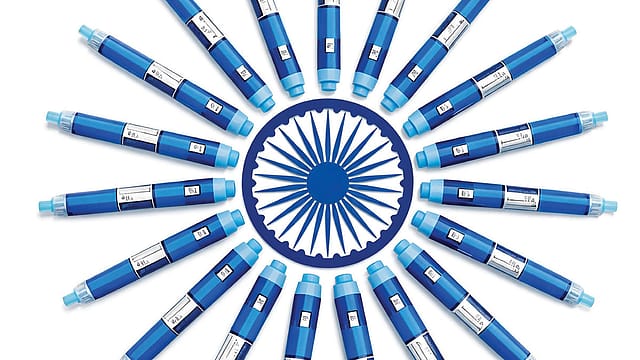
THAT INDIA WAS GOING TO BE A BIG MARKET for the new class of weight-loss drugs that had taken the world by storm was never in question. Several surveys and studies over the years have shown just how vast the numbers of the obese and diabetics are in the country. And even before these drugs were officially launched in India last year, it was an open secret that many affluent Indians were stashing these drugs in their bags on their return trips from places like Europe and Dubai where they were available, or procuring them for many times over the original price from dodgy black marketers.
But when they did get officially launched—Eli Lilly’s Mounjaro in March last year, followed by Novo Nordisk’s Wegovy three months later, and Ozempic in December—what came as a surprise was just how cavernous the appetite for these drugs turned out to be. Even though their use was restricted, given their prohibitive costs, to a tiny sliver of society, they became an instant sensation. An aggressive promotion matched by an equally exuberant endorsement by metabolic specialists and weight-loss clinics, and further boosted by such ease of access that one could order the drugs like groceries from online quick commerce apps, meant that the sales of these drugs grew month-on-month, with Mounjaro even overtaking the popular antibiotic Augmentin (by GSK), just months after its launch, to become India’s top-selling drug by value in October. Mounjaro became such a rage that it turned many of us into internet sleuths last year, trawling social media feeds of celebrities to search for the kind of sunken faces and dramatic weight loss that no amount of intermittent fasting and Pilates could explain.

Youth Issue 2026
24 Apr 2026 - Vol 04 | Issue 68
50 Portraits of Icons and Achievers
But if 2025 was the year these drugs broke through into the popular imagination, 2026 is poised to be the year they take their next big leap, fundamentally rewiring our relationship with weight loss. One of the most important elements in the march of these drugs—semaglutides—will lose its patent in India and several other key markets like China, Brazil, Canada, and Türkiye this March, which means a glut of cheaper generics, several of them from Indian pharma companies, will flood the markets, opening up these metabolic therapies to a much wider swathe of the population. Then there is the next revolution taking place away from the markets and in the labs of these pharama companies. A second generation of these drugs, more effective and convenient, that shifts the thrust from mere total weight loss to the quality of weight loss, is now on its way.
The likes of Wegovy and Mounjaro mimic the hormone GLP-1 which signals to our brains that we have had enough food and gets the stomach to slow down the process of emptying the consumed food so we stay satiated longer. The patent that covered the composition of the GLP-1 drug semaglutide—the active ingredient in Wegovy and Ozempic—had already expired in India in 2024. But what had so far stopped pharma companies from selling their own generic versions was another patent that covered the drug’s formulation and the injection devices. The expiry of this patent in March has been long awaited.
Several Indian companies are known to be developing their own generic versions of this drug both for the Indian and foreign markets, and we know so far that at least three of them (Dr Reddy’s Laboratories, Sun Pharmaceutical Industries, and Alkem Laboratories) have already received regulatory approval in India. Then there are the many deals and licensing partnerships many of these firms are getting into in anticipation of that moment. These range from agreements for the domestic market, such as Lupin’s recent announcement that it had signed an agreement to license, supply and distribute a novel GLP-1 drug called Bofanglutide (made by the Chinese firm Gan & Lee Pharmaceuticals) in India, to those that are laying the groundwork for international expansion, such as Ajanta Pharma’s deal with Biocon to distribute the latter’s generic semaglutide in 26 African and Asian countries. According to some estimates, when these drugs hit the market in India, prices would drop by 30 to 50 per cent initially, and by 70 to 75 per cent over time.
But the wider adoption the arrival of such generics will spur is only part of the story. The nature of weight-loss drugs will evolve this year, with the coming of a second generation that will reorient the conversation around weight loss from an absolute drop in numbers on the weighing scale to the quality of that weight loss. Not only are the coming drugs said to be more effective but they will be easier to take (oral pills instead of jabs, or monthly injections instead of the current once weekly affair), and some will come with the promise of weight loss with little or no loss in muscle mass (as has been routinely witnessed with patients on the current drugs) and with more control over common side effects like nausea.
What has got this space particularly excited is the arrival of oral GLP-1 drugs. Novo Nordisk is set to soon launch a pill version of semaglutide, and its rival Eli Lilly is snapping close on its heels with its own much-anticipated oral pill orforglipron. The results from their trials have already created a stir. While neither firm has revealed much about how these drugs will be priced, given that it is generally cheaper to mass-produce pills than shots and also that it is likelier people will prefer to stick with pills rather than a cumbersome weekly shot, many believe these pills will bring forth a whole new level of rapid adoption.
There are the improved versions of the injectables too, from Novo Nordisk’s CagriSema, which is a combination of Wegovy and another molecule called amylin, and Eli Lilly’s new retatrutide, which is said to be a ‘triple agonist’ drug that activates three receptors involved in weight control, to a once-monthly jab called MariTide by an American firm named Amgen. All these jabs are said to be more powerful than the ones currently available in the market, and it is possible that we will hear a lot more about them this year.
As these pharma companies jostle with one another for a bigger share of the market, introducing newer types of options, the weight-loss market will probably shape into one where individuals will have a buffet of options to choose from.
In 2025, the big change these drugs brought about was in our own perception of obesity and weight loss. We began moving from seeing obesity as an issue of poor management to a disease like any other chronic ailment that could be treated.
As these drugs see wider adoption and more options arise, we should expect a lot more of that this year.