Why Catherine O’Hara Will Always Be Comedy’s Quiet Giant
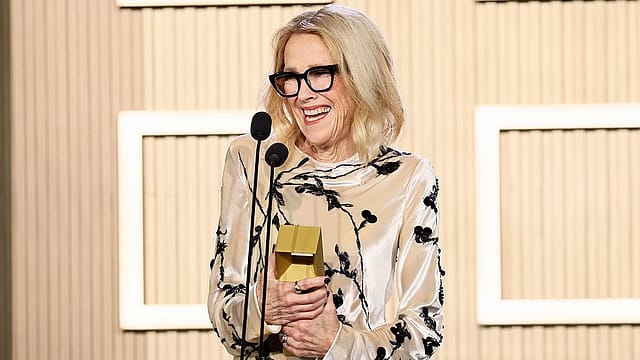
Catherine O’Hara never needed to dominate a scene to own it. A pause, a look, an accent that danced between absurd and profound, she could make audiences laugh and ache at the same time. That rare alchemy is why her passing at 71 has left a generation of viewers feeling as though they’ve lost not just an actor, but a part of their emotional memory.
For many, O’Hara will always be Kate McCallister, the frantic yet fiercely loving mother in Home Alone, sprinting across continents to reach her forgotten son. The film became a holiday ritual, but it was her performance that grounded the chaos with heart. Amid slapstick mayhem, she gave the story its soul.
Yet her journey to cinematic immortality began long before Hollywood. Born and raised in Toronto, O’Hara got her start at the legendary Second City, initially as a waitress before earning her way onto the stage. By the late 1970s, she was a core part of Second City Television (SCTV), alongside comedy giants like Eugene Levy, John Candy and Rick Moranis. Those early years forged her fearless, offbeat style—characters that were strange, sharp, and deeply observant.

Survival Instinct
22 May 2026 - Vol 04 | Issue 72
India navigates global economic turmoil with austerity and smart diplomacy
O’Hara often credited her Canadian roots for that sensibility. Growing up without the heavy weight of nationalism, she once said, taught her to look outward, to laugh at herself, and to never take ego too seriously. That worldview infused her comedy with empathy, even at its most outrageous.
Through the decades, she slipped effortlessly between cult classics and mainstream hits. In Beetlejuice, she was Delia Deetz—dramatic, art-obsessed, unforgettable. In Christopher Guest’s mockumentaries—Waiting for Guffman, Best in Show, A Mighty Wind, and For Your Consideration—she mastered improvisational brilliance. Her turn as Cookie Fleck in Best in Show remains one of comedy’s purest performances, while For Your Consideration earned her a National Board of Review Award.
Then, in 2015, came a late-career renaissance that introduced her to an entirely new generation.
In Schitt’s Creek, O’Hara transformed what could have been a caricature into an icon. Beneath the wigs, the couture, and the famously unplaceable accent was a woman clinging to dignity while learning how to begin again. The role earned O’Hara an Emmy and a Golden Globe—and, more importantly, cemented her as a cultural touchstone during the isolation of the pandemic years.
Accepting her Emmy, she thanked Eugene and Dan Levy for allowing her to play “a woman of a certain age—my age—who gets to fully be her ridiculous self.” Dan Levy later wrote that working alongside her felt like “dancing in the warm glow of Catherine O’Hara’s brilliance.”
Tributes poured in from across the world. Canada’s Prime Minister called her a legend of Canadian comedy. Christopher Guest mourned the loss of “one of the comic giants of our age.” Seth Rogen, who worked with her on The Studio, said Home Alone was the film that made him want to make movies, adding that O’Hara was “hysterical, kind, intuitive, generous.”
Remarkably, O’Hara continued working almost until the end—appearing in The Last of Us and The Studio, earning fresh nominations and proving that her relevance never waned. She didn’t fade. She endured.
Catherine O’Hara leaves behind her husband Bo Welch, her sons Matthew and Luke, her siblings—and millions of fans who grew up laughing because of her, and later, learning from her.
She showed us that comedy could be absurd without being cruel. That ageing could be powerful. That dignity and ridiculousness could coexist.
And that sometimes, the quietest presence leaves the loudest echo.
(With inputs from ANI)