Malayalam filmmaker Jeethu Joseph has created a hit franchise with 'Drishyam' that resonates across languages
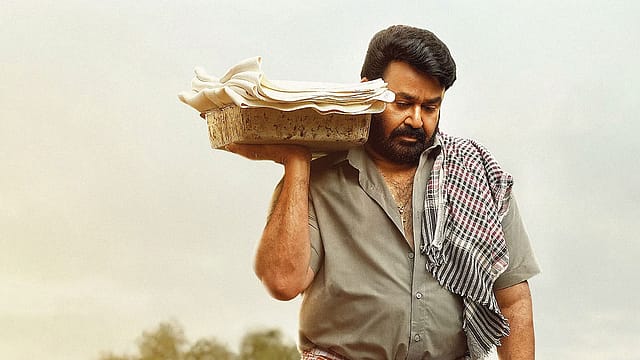
GEORGEKUTTY IS exhausted. It’s been 13 years since he committed a crime that everyone is aware of but no one can prove. He has become absent minded, switching off the lights when everyone is in the room, spitting water on to the ground instead of the washbasin. His eyes look haunted, and the face is pinched. He may have won his battles with the world, but the war within his own mind is at its peak.
Ever since Drishyam released in 2013, where Georgekutty went to extreme lengths to protect his daughter, we have felt his pain. An upstanding middle-class man, not too educated, not too bright, but like Goldilocks, just right. He was in his words, an ordinary man, driven to extraordinary things. In Drishyam 3, which released this week, and has already raced to ₹140 crore at the box office, Georgekutty is plagued by the demons he has unleashed and appears weary of the cat and mouse game with the police and the parents of the boy his daughter killed in an act of self defence in the first instalment of Drishyam. He has lost the cockiness he had in Drishyam 2 in 2021, where he was constantly one step ahead of the police, and even the victim’s parents.
In the last 13 years, Drishyam 1 made ₹62 crore at the box office, with Drishyam 2 being released on streaming during Covid, sparked countless remakes, and burnished the 40-year stardom of Mohanlal. Much of it is due to the director of the trilogy, Jeethu Joseph. Jeethu, 53, still remembers how it all started: “I had actually narrated the script to producer Antony Perumbavoor, who is a close confidant of Mohanlal. He is the one who narrated it to Lal Sir initially. They both understood my vision and instantly fell in love with the story. Even in our subsequent meetings, it was clear that we all agreed that this was a good film that was one of its kind. That energy was definitely carried forward as we made the film.”
As scholars Dr Sony Jalarajan Raj and Adith K Suresh observe, Drishyam is more than a movie. It is the portrayal of the family as a manifestation of the identity of the father. “The psychological state of the father, his secrets and motives, ultimately decide the fate of the family as a structural unit in crisis, because the actions and anxieties of a paternal protagonist often emphasise the need to depend on masculinity and patriarchal privilege to solve problems,” they write.

For Jeethu, Georgekutty was a very human character and not a typical hero. Although he does extraordinary things, Georgekutty is a common man who embodies the complexities you see in every human being. Time and age definitely change a human being. Also, the fear in him slowly starts consuming him from within. No matter how much of a brave face he tries to put on the outside, that fear within him grows everyday. It even turns him to his faith, as shown he prays alone in a church.
It shows him developing empathy, realising that in his single-minded dedication to saving his family, he may have hurt others. It also shows him opening up to the idea of freedom for his daughters— marriage outside the state for his elder daughter and studies in Singapore for the younger one. When his wife shows happiness at his changed attitude, he acknowledges that change is inevitable.
For Jeethu it was important to make Georgekutty realise this. As he told me: “No human being is perfect. But what makes us beautiful is our ability to learn and grow. Georgekutty is a representation of a lot of fathers in our society. Obviously, he is moulded by the values and thoughts of the time that he grew up in. But as the world changes, he is being introduced to these changes in thoughts and understandings by his daughters. And he embraces these changes and tries to transform himself. That’s what makes him all the more endearing. I see a lot of parents around me, myself included, who pay attention to the viewpoints of their children. We always talk at home about various topics, because I like to listen and understand what their point of view is. I may not understand all of it, but I try. Georgekutty is also just a normal father who respects his daughters as much as he loves them.”
Some of that might be Jeethu’s own dynamic. He works mostly at home in Kochi. “I am a homebody and I like to spend time with my family. I got married and had kids before I started making films. So I guess for me that has been my status quo from the get go,” he says. The son of politician VV Joseph, Jeethu studied at Fatima Matha School in Piravom and then at St Berchmans College, Changanassery, before completing his BA in Economics from Nirmala College, Muvattupuzha. During this time, he aspired to study at the Film and Television Institute of India, Pune, although his father wanted him to become an engineer. “I have always loved films,” he says. “It was when I was in college that I started watching them more religiously. I had a few friends who were really into films and it is from long conversations and discussions with them that I fell even deeper in love with films. After college, they went into other fields, but the film bug in me grew stronger.”
He made his first film, Detective, in 2007, and is familiar with the Malayalam film industry which explains the meta commentary in the film on the rise of the ₹100-crore club; the emergence of a global market for Malayalam cinema; and the price of piracy when Georgekutty becomes a successful film producer. It was never intended to be a forced placement, though. “I thought to myself what would Georgekutty and his family be doing now. I felt that him producing a movie was the natural progression. In the second part, we discuss about him planning a script and making it into a book, so I picked up from that and moved forward. Since I am someone who works in the film industry, the things I see and hear around me obviously seeps into the dialogues. But it was never intentional,” he adds.
IT IS HIS FIFTH film with “Lal Sir” and he is still amazed by his effortless performance. He calls him an absolute director’s actor and the best part is he delivers every single time. Since they have worked together multiple times now, it feels like he gets his vision even without words now. For instance, the parts where he switches the lights off and spitting the water outside the wash basin were all in the script itself, intended to show his growing tension. “Those were inspired from my late father’s actions. He had become really absent-minded in the latter part of his life, when he was under a lot of internal stress. So I wanted to bring that layer into Georgekutty’s character because he is also under a lot of anxiety and fear bottled up inside. But of course, when you give such a character to an actor like Lal Sir, there are nuances that he adds to what was written on paper and elevates it beyond what I envisioned,” he adds.
Eventually, Drishyam is also about entitled boys and their enabling mothers, something even more current in the age of Twisha Sharma, the young woman in Bhopal who allegedly committed suicide because of harassment in her marital home. Jeethu rationalises that Geetha Prabhakar, like many mothers, finds it very difficult to acknowledge the wrongdoings of her child. Varun was her only child and he was extremely pampered. Even though her husband Prabhakar acknowledges it and apologises to Georgekutty in the first film for his wrongdoing, it is almost impossible for Geetha to do that. “It is not easy for people to look at things from the opposite perspective. The world would definitely be a much better place if we could all do that,” says Jeethu.
So will there be a ‘Drishyam 4’? There is a suggestion at the end, but Jeethu says it was not meant that way. “In the initial script, we were planning to end it on Geetha’s silence. But Lal Sir suggested the response that you see in the film now. It was mainly for two reasons. One was to complete the arcs of Geetha and Prabhakar. This movie has always been an emotional tug of war between two families. So we wanted to show where the other family stands. Second was to explore a more philosophical view that vengeance eats you alive. Some people get so lost in revenge that they don’t know when to stop,” says Jeethu.
Whether or not there is another in the franchise, the many remakes of Drishyam continue, with the emotions being so universal. “A family in India can relate to it just as much as a family in China and that’s why it is so popular,” says Jeethu. That’s why it has become one of the most remade films. The story has been remade and released in Hindi, Tamil, Kannada, and Telugu. It has also been released in China and Sri Lanka. A remake in Korean is in progress now and the producers recently confirmed an Indonesian and Spanish remake. The universality of the subject and its adaptability to any cultures is probably the main reason for it, explains Jeethu.
Many things may change in an ever-transforming world, but nothing comes close to the love of a parent for his or her child. Everything else is an illusion.