Main Vaapas Aaunga Movie Review: Travelling through Trauma
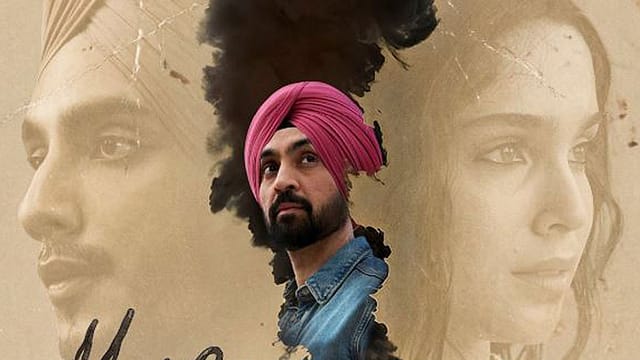
In a stunning cameo that reeks of pain and trauma, Vinod Nagpal's Pali Chacha answers Diljit Dosanjh's Nirvair about why his generation doesn't speak of the scars of Partition: "If we ever expelled everything that happened to us, the only lesson you all would learn is of hatred and enmity." That's why throughout the film, he and his elder brother keep repeating the mantra: This world has ended, don't look back. But this world has left its poison, in its rivers, its earth, its people. And Main Vaapas Aaunga is a cry to forget that. A world in which so many have lost their homelands, from the people of Punjab and Bengal during Partition, to the people of Kashmir in the late 80s and early 90s, from wars in Ukraine to Gaza. The world is as bloody but of a different time, when a playful Keenu and a beautiful Jiya fell in love. He is the heartbroken Dilfigar, and she is the princess Mallika Dilfareb, characters borrowed from Munshi Premchand, and as full of promise and passion. It is Punjab on the eve of Partition and a union between a Sikh and a Muslim is unthinkable. So we will convert to Christianity, says the innocent Keenu/Dilfareb.
But then passions run wild, neighbours turn on each other, groups of young men become killing machines, and as the young Keenu, now on the deathbed, says the Martians are everywhere, raping women, murdering men, and ransacking homes. Keenu has no option but to flee for his life, leaving Jiya behind, wth the promise Main Vaapas Aaonga (I will return). He does try, but leaves again, unable to see what has become of his beloved home, Sargodha. What was once one country has been sundered into two, with agony on both sides, As one song says: Gardane jo kati woh bhi main woh bhi tu (Those who were killed were both you and me). The same city now looks different, as trains send people back and forth from Lahore to Amritsar, cutting lines through villages, towns, states, families.Keenu makes a life for himself in new India, working hard to build a new life, not looking back, burying all the joys of his adolescence, from cricket to poetry to hanging out with his beloved. But he remembers his promise to return to the one he loved, one among the many women he left behind. His mother, sister, and others of his family. Like many other refugees, his family, the Grewals, thought they would return soon, after the fires of Partition had been doused. They would reclaim their women, their homes, their lands, their way of life.

Greening the Future
23 Jul 2026 - Vol 05 | Issue 30
Securing a sustainable India
The story unfolds like a mystery, with the older Keenu (a masterful Naseeruddin Shah) telling his grandson details that he pieces together to unravel the mystery of the woman, Mallika Dilfareb, he left behind. It takes Dosanjh into learning about Partition, in a history lesson 101, and locating the Sargodha of his grandfather's memory. Dosanjh plays a British born IT engineer and stand up comedian, which allows him easier access to Pakistan than it would to an Indian, one of the many ironies Imtiaz Ali highlights in the film.
Dosanjh is your typical Ali hero, running away from commitment, and looking for a grand love, the kind his grandfather had. His girlfriend asks him: Where do you get this kind of love?
And that is the nub of the movie. You don't get such love. You have to open your heart to let it happen. Irshad Kamil's lyrics, AR Rahman's music, fresh voices like that of Faheem Abdullah, Tarrukh Raina, and NIlanjana Ghosh, and the sadness steeped into the waters of the five rivers. This is a film, as author Manil Suri says in another context, about never going back home. but also of how one can never truly get away. It is a call to action for everyone who has lost and loved their homeland, to not lose hope. Ever.