How Iranian filmmakers defied the Islamic Republic to create a new means of truth-telling
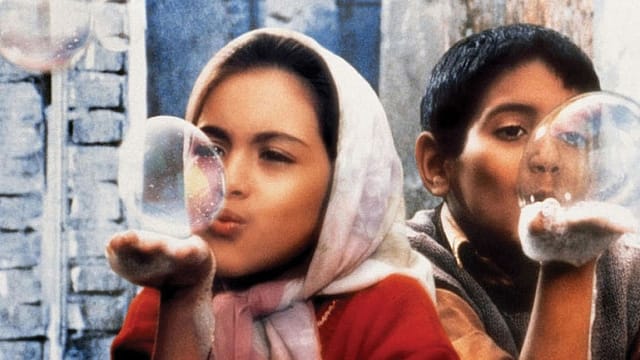
IN THE grand landscape of world cinema, few national film traditions have exercised the quiet moral authority of Iranian cinema. Without vast budgets, elaborate sets or technological spectacle, Iranian filmmakers have produced some of the most profound cinematic works of the past half-century. Their films unfold with deceptive simplicity—children walking to school, families navigating domestic tensions, strangers conversing on long rural roads—but beneath this surface lies a deep philosophical inquiry into life, morality and the fragile dignity of human existence.
Yet Iranian cinema is not merely an aesthetic tradition. It is also a story of art under pressure, a creative culture shaped by censorship, political upheaval, exile and resistance. The remarkable achievement of Iranian filmmakers is that, despite these constraints, they have built one of the most respected cinematic traditions in the world.
The modern identity of Iranian cinema began to emerge during the 1960s and 1970s, a period known as the Iranian New Wave. Filmmakers rejected the melodramatic commercial films that dominated the industry and instead turned toward realism, poetry, and social introspection. One of the earliest pioneers was Dariush Mehrjui. His landmark film, The Cow (1968) offered a stark and deeply moving portrait of rural life. The film’s story—about a villager whose emotional world collapses after the loss of his beloved cow—may sound simple, but it revealed something profound about identity, community and psychological fragility.

Alongside Mehrjui, directors like Sohrab Shahid-Saless crafted films such as Still Life (1974), portraying the quiet loneliness of ordinary individuals trapped in monotonous lives. These filmmakers developed a contemplative cinematic language built on long takes, minimal dialogue, and emotional restraint.
But history intervened. The 1979 Iranian Revolution fundamentally reshaped the country’s cultural institutions. Cinema, like all art, came under strict ideological scrutiny. Filmmakers had to navigate a system of censorship that controlled everything from depictions of gender relations to the moral tone of narratives. Ironically, these restrictions did not destroy Iranian cinema—they forced it to evolve.
No filmmaker embodies the intellectual spirit of Iranian cinema more fully than Abbas Kiarostami. Widely regarded as one of the greatest directors in film history, Kiarostami transformed minimalism into a form of cinematic philosophy. His masterpiece Taste of Cherry (1997), which won the Palme d’Or, follows a man driving through the outskirts of Tehran searching for someone willing to bury him after he commits suicide. The film unfolds almost entirely inside a car, with conversations between the protagonist and various strangers. Yet within this minimal structure lies a profound meditation on life, despair and the possibility of hope.
Another extraordinary work, Close- Up (1990), reconstructs the real-life trial of a man who impersonated filmmaker Mohsen Makhmalbaf. Blending documentary and fiction, the film becomes a haunting exploration of identity and the human desire to belong. Kiarostami’s cinema asks the audience not merely to watch, but to participate in meaning. His films rarely provide closure. Instead, they open a space for contemplation.
If Kiarostami represented philosophical introspection, Mohsen Makhmalbaf embodied the political conscience of Iranian cinema. A former revolutionary activist who spent years in prison under the Shah’s regime, Makhmalbaf later became one of Iran’s most daring filmmakers. His autobiographical film A Moment of Innocence (1996) revisits a youthful act of political violence by reconstructing it through actors decades later. The result is not propaganda but a meditation on memory, forgiveness, and historical responsibility.
However, as political pressures intensified in Iran, Makhmalbaf eventually went into exile. His departure symbolised a broader pattern: many Iranian filmmakers have had to continue their work outside the country’s borders.
Remarkably, the Makhmalbaf family itself became a cinematic dynasty. His daughter Samira Makhmalbaf gained international acclaim at just 17 with The Apple (1998), which premiered at the Cannes Film Festival.
Her later film Blackboards (2000) portrayed Kurdish teachers wandering mountainous borders with blackboards strapped to their backs, searching for students among displaced communities. The imagery was stark and unforgettable—a metaphor for knowledge struggling to survive amid political turmoil.
While earlier Iranian filmmakers leaned toward poetic minimalism, Asghar Farhadi introduced a gripping dramatic realism rooted in moral ambiguity. His internationally acclaimed film A Separation (2011) won the Academy Award for Best International Feature Film and brought unprecedented global recognition to Iranian cinema. At its surface, the film tells the story of a middle-class couple undergoing a divorce while caring for an elderly parent. But beneath the domestic drama lies a complex exploration of class divisions, gender roles, religious ethics, and the fragile nature of truth.
Farhadi’s storytelling functions like a moral labyrinth. Each character is both sympathetic and flawed. The audience is forced to confront its own assumptions about justice. His later film The Salesman (2016), inspired by Arthur Miller’s play Death of a Salesman, examines revenge, dignity, and trauma within the life of a theatre couple.
IF ONE FILMMAKER symbolises the resilience of Iranian cinema, it is Jafar Panahi. Panahi faced imprisonment and a 20-year ban on filmmaking imposed by Iranian authorities. Yet he refused to stop creating. His film The Circle (2000), which portrays women struggling against social restrictions, won the Golden Lion at the Venice Film Festival.
Later, during house arrest, Panahi secretly made This Is Not a Film (2011) inside his apartment. The footage was famously smuggled out of Iran on a USB drive hidden inside a cake and screened at the Cannes Film Festival. The act itself became cinematic history: proof that storytelling cannot easily be silenced.
Another powerful voice in Iranian cinema is Majid Majidi, whose films often focus on children and spiritual innocence. His beloved film Children of Heaven (1997) tells the story of a brother and sister sharing a single pair of shoes after losing the other. Through this modest premise, Majidi crafts a deeply moving narrative about poverty, dignity, and love. The film was nominated for the Academy Award for Best Foreign Language Film, marking one of the earliest moments when Iranian cinema gained global recognition. Majidi’s work reveals something essential about Iranian storytelling: the ability to discover the sacred within ordinary life.
Perhaps the greatest paradox of Iranian cinema is that the very restrictions imposed upon filmmakers—censorship, surveillance, political scrutiny—have forced them to invent new cinematic languages. Unable to depict certain realities directly, they turned toward allegory, symbolism and the perspective of children. Landscapes became metaphors. Silence became narrative. The result is a cinema that feels closer to poetry than spectacle.
Today, Iranian cinema stands as one of the most intellectually and morally compelling traditions in global filmmaking. Through the work of masters like Kiarostami, Farhadi, Panahi, Majidi and Mohsen Makhmalbaf, Iran has produced films that transcend geography and politics. These filmmakers transformed limitation into artistic freedom and everyday life into philosophical inquiry.
In an era dominated by cinematic spectacle, Iranian cinema reminds us that the most powerful stories are sometimes whispered—in the footsteps of a child running through a dusty alley, in a quiet conversation inside a moving car, or in the silent moral dilemma of an ordinary family. And in that quietness, lies its enduring greatness.