The Spectral City: Giving the ghosts of Delhi a voice
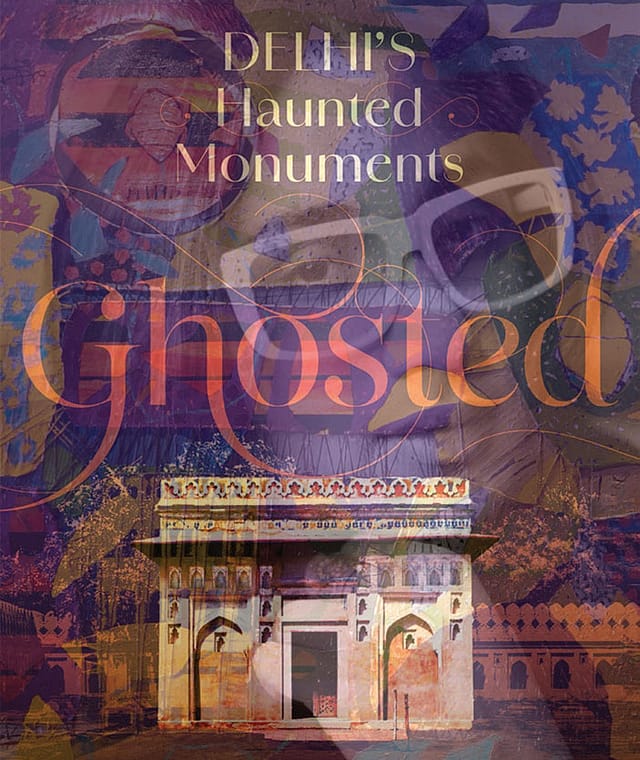
SOME BOOKS do not merely describe a city—they dwell in it, drift through it, dream with it. Eric Chopra’s Ghosted: Delhi’s Haunted Monuments is one such work: a shimmering, shape-shifting love letter to a city where history never really dies, where ruins murmur and where ghosts—real, imagined, inherited—tug at the hems of our hurried lives. It is a debut that feels uncannily assured, as haunting as the monuments it maps and as humane as the man who animates them, stitching past and present with startling tenderness and rare narrative grace.
At the recent Rainbow Lit Festival 2025, where I too took the stage, Ghosted felt like the book everyone whispered about, the book that lingered long after the sessions closed. Chopra is not simply a historian—he is a medium. He channels Delhi’s labyrinthine past with lyricism and longing, an instinct unmistakably queer in its desire to find belonging in the margins, the ruins, the half-told tales. His project—like much of queer life—is to ask: Whose stories survive, and whose remain locked behind doors no one opens?
Jamali–Kamali is one of the most riveting chapters. Chopra writes of its desolate beauty, its locked tombs, its jinn and the speculation that Jamali and Kamali were lovers—a possibility history refuses to confirm yet queer communities lovingly reclaim. Whether or not their intimacy was real, the site has long offered queer people a rare sense of inclusion. “Imagine,” he prompts, “traversing centuries and not once coming across a story that resembles yours.”
Ghosted becomes a romance—not of bodies, but of belonging; not of lovers, but of lineages. The ghosts here are not only jinn but the silenced and the sidelined. Chopra resurrects them through research, reverence, and irresistible storytelling. He wanders through Delhi’s necropolises—Firoz Shah Kotla, Tughlakabad, Khooni Darwaza—with the confidence of a scholar and the curiosity of a child. Each ruin becomes a relationship; each ghost a guide, shimmering briefly before disappearing back into stone and silence.

Survival Instinct
22 May 2026 - Vol 04 | Issue 72
India navigates global economic turmoil with austerity and smart diplomacy
His writing is warm without sentimentality, witty without mockery, and woven with alliteration that feels like footsteps echoing inside stone corridors. Chopra excels at cinematic detail: a corridor breathes, a tomb sighs, a stepwell stares back. His prose performs what Delhi does best—balancing decay with divinity, terror with tenderness, myth with memory, and always inviting the reader deeper.
He never treats ghosts as gimmicks. They become invitations to reconsider who interacts with monuments and why. At Quli Khan’s Tomb—today a site for coffee drinkers and wedding shoots—he reminds us that “the pasts which haunt us are often ones we select and interpret.”
What makes this book luminous is Chopra’s insistence that history is not a closed canon but a living, breathing ecosystem. Museums, musicals, oral histories and gossip all pulse through his pages. This allows Ghosted to move like Delhi itself—layered, labyrinthine, lush with contradictions. As Ira Mukhoty observes, it becomes “a rambunctious, playful and deeply personal ode to Delhi.”
In the end, Ghosted leaves the reader both enchanted and unsettled—the highest compliment for a book about spirits. It reminds us that the cities we love are not defined by architecture alone but by stories—told, untold, half-told. It tells queer readers especially that we, too, have always existed in the interstices, the silences, the shadows, quietly shaping history even when denied its spotlight.
Chopra has given Delhi a gift. He has given its ghosts a voice. And he has given readers—a community hungry for inheritance—a monument of our own, shimmering softly in the city’s eternal dusk.