The Politics of Disgrace
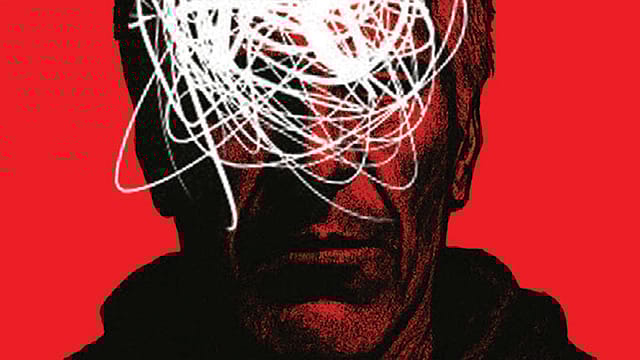
IN LITERATURE, I DON’T THINK anyone brings out the moral complexity of being disgraced as powerfully as JM Coetzee’s David Lurie in the novel Disgrace. An academic’s slow descent into the dark recesses of shame and averted atonement in post-apartheid South Africa is a point where our judgement can never fully comprehend the fall of a man who defies the easy binaries of a society finding its free expressions in violent extremes. In disgrace, hell is not the other.
The plotline changes in politics. In popular perception, the political animal is prewired to survive the serial attacks of shame, for public life is never an open book. That is mostly true about the garden variety. The exceptions are those who have redeemed stump-friendly clichés like “politics of change” by daring to make the struggle for power more than a permanent clash between winners and losers. Isn’t it always the winner who is being shamed by the loser’s last weapon of desperation? In the ensuing public trial, accusation is invariably the crime. And the shame of the loser, in the ultimate analysis, cannot be larger than the act of losing itself. It is not the weight of shame that tilts the moral balance of power but the exigencies of realpolitik. And being shamed is not the same as being disgraced, after all. In the first, you are still left with the space to fight and reclaim the “stolen” honour. Disgrace, the fall to darkness with every door closing behind you, is more organic.
In life, no name has perhaps rhymed with disgrace as convincingly as Jeffrey Epstein, financial wizard, top-notch networker, and the dazzling impresario for the one-per cent segment. When the mask finally slipped, the disgrace of the sexual offender was so unbearable that he killed himself in jail. Death did not eradicate his story from the lives of others who figured in his secret orbit. Posthumous Epstein has come to haunt rarefied corridors of power. And it seems only someone like Donald Trump can survive the stigma of being there as an item in Epstein’s glossary of shame, which is hardly surprising considering how the persistence of the American president’s brazenness has minimised popular intolerance towards sleaze and subterfuge. Normal people are not as Teflon-coated as Trump.

Imran Khan: Pakistan’s Prisoner
27 Feb 2026 - Vol 04 | Issue 60
The descent and despair of Imran Khan
Spectral Epstein took a heavier toll when disgrace made power untenable. Among them a prince who was a serial embarrassment to the British monarchy. Prince Andrew, King Charles’ younger brother, became a commoner as he was exposed as a partner in Epstein’s crimes, but it was the rite of disgrace, from which the Crown could not distance itself, that turned the high-profile philanderer into an overnight outcast. Not to speak of the other two Britons: Ghislaine Maxwell, Epstein’s girlfriend and chief facilitator, is a prisoner in America; Peter Mandelson, the original spinmeister of British politics, has lost his ambassador’s job in Washington for his friendship with the disgraced. There was a sense of inevitability about the fall of those who paid the highest price for the sin of association. It’s as if disgrace multiplies in reflected evil.
That said, the degree of disgrace varies according to the political application of morality. The Bills, both Clinton and Gates, were spared a public trial despite their “acquaintance” with the disgraced. No sanctimonious fingers are being pointed towards them. The sudden fall and cancellation of Larry Summers for keeping his correspondence open even after Epstein pleading guilty tells a different story, even though there is a touch of the inevitable in his punishment too. Only a publication like the Wall Street Journal has dared to ask whether selective morality was applied in the case of an economist who was a revered figure in administration and academia—but he hasn’t endeared himself to the left. Disgrace has its uses in ideological warfare.
Disgrace is trial in retrospect. The fall comes when excavations, which themselves are not necessarily devoid of political motives, reveal a darker backstory. Once-upon-a-time transgressions, including drunken adolescent misbehaviour, could return, asking for closure, when the moral legitimacy of the power seeker is questioned by the victim from the past. Disgrace is political theatre when morality is subordinated to ideology, when a journey to the remotest past is undertaken with the sole purpose of retailing disgrace in the marketplace of shame. It is said that the #MeToo movement lost its original moral authenticity when accusations, in retrospect or otherwise, became too casual and perfunctory. Is the haunting of Jeffrey Epstein entering a similar province?