The Future of Fairness: Being young and Indian means a lot today
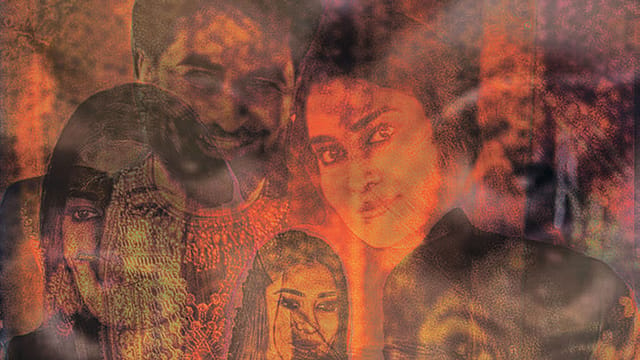
THE LOCKDOWN TAUGHT many of us to count what mattered. We counted breath. We counted blessings. We counted the faces we missed. We also discovered, in that enforced stillness, who among us was willing to imagine a world rebuilt not merely as it had been, but as it ought to be. Somewhere in those uncertain months, amid anxiety and isolation, I also counted a new friendship.
It began over lunch at the home of Samir Saran. Samir had invited me upstairs to meet a young woman he wanted me to know. I remember climbing the stairs with no expectation and walking into a room lit by a smile that seemed larger than the afternoon itself. Bright-eyed, quick to laugh, brimming with conviction, Aishwarya Sharma possessed that rare quality we mistake for confidence until we realise it is really purpose.
Many young people speak passionately. Fewer speak with clarity. Fewer still listen with equal passion. What struck me was not that Aishwarya loved fashion. It was that she refused to let fashion be only about beauty. Where others saw couture, she saw craftspeople. Where others admired a garment, she wondered about the woman who embroidered it, the man who dyed its fabric, the artisan whose hands might never wear what they created. She spoke about wages before wardrobes, dignity before desirability, sustainability before slogans. Fashion, in her telling, was never about labels.
It was about lives. That conversation stayed with me.
Perhaps it was because I have spent my own life in another glamorous industry. Restaurants, like fashion, are celebrated for what reaches the customer. We applaud the plate but often overlook the farmer, the dishwasher, the porter, the prep cook, the invisible army whose labour becomes someone else’s luxury. Every profession has its hidden hands. Every success has unseen shoulders beneath it. The older I grow, the more I find myself searching for people who notice those shoulders.
Years later, when Penguin asked who I wanted beside me, as my memoir entered the world in Delhi, my answer came easily. I wanted two young voices: Anish Gawande and Aishwarya Sharma. Different journeys. Different vocabularies. Different energies. Yet united by a belief that progress means little unless it expands dignity. They did not merely launch a book. They represented the future I hoped my book might find.
My generation is often guilty of underestimating the young. We dismiss them as distracted, impatient or consumed by the superficial. Every generation has done this to the one that follows. Every generation has been proved wrong. The young are asking questions many of us forgot to ask. Who made this? Who was left out? Who bears the cost? Who profits? Can beauty exist without fairness? Can growth exist without justice? Can success mean anything if humanity is absent?
These are not fashionable questions. They are necessary ones.
Tomorrow will not become kinder because technology improves or economies expand. It will become kinder because young people decide that empathy is not a sentiment but a system, that compassion belongs in boardrooms as much as in charities, and that success is measured not only by what we build but by whom we bring with us.
When I think of Aishwarya, I do not think first of titles or accolades. I think of that first afternoon, of a young woman whose imagination was wide enough to hold both beauty and justice in the same conversation.
If enough young Indians choose to see the world that way, tomorrow will not merely arrive. It will be shaped—patiently, courageously and collectively—by people who understand that fairness is not an aspiration reserved for speeches but a practice lived every single day. The future has never belonged to those who inherited the loudest voices. It has always belonged to those who chose to speak for the quietest ones. It will be better than today.