The Art of Preservation: A designer keeps old Bombay alive in his neighbourhood
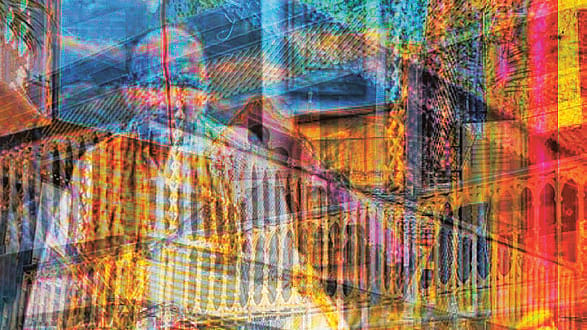
BOMBAY IS A CITY that never stops introducing itself. Every visit reveals another lane, another bakery, another balcony heavy with bougainvillea, another family that has quietly carried forward traditions while skyscrapers rise around them. Yet when friends from the US asked me to show them the Bombay I loved most— not the obvious landmarks, but the city that had stolen my heart—I never took them first to Marine Drive or the Gateway. I took them to Khotachiwadi.
Hidden behind Girgaum’s bustle, Khotachiwadi feels less like a neighbourhood than a memory that somehow refused to surrender. Narrow lanes curve past Portuguese-style homes dressed in pastel colours, carved wooden balconies lean into conversations, flowering gardens soften old walls, and time itself appears to slow down. Here, Bombay remembers who she once was without ever pretending she has not changed.
At the centre of that remembrance stands James Ferreira.
To call James merely a fashion designer is to mistake the frame for the painting. Yes, he is among India’s pioneering designers, a creator whose garments have graced remarkable people and memorable occasions. But his greatest masterpiece may not hang in a wardrobe at all. It lives in the house he has refused to abandon, the neighbourhood he has quietly championed, and the generosity with which he has opened both to the world.
When I brought my friends to James’ home, I watched something extraordinary unfold. These were people who had wandered museums in Paris, admired townhouses in London and brownstones in New York. Yet they stood in Khotachiwadi speechless. They lingered over every carved staircase, every ageing photograph, every shaft of afternoon light filtering through wooden shutters. They fell in love not because the place was grand, but because it was genuine. They felt they had discovered the beating heart of Bombay, hidden in plain sight.
That is James’s gift.
He has never allowed heritage to become a museum exhibit. He has kept it alive. Through his home, his hospitality, his art, his conversations and his unwavering commitment to this tiny pocket of the city, he has reminded us that preservation is not simply about saving buildings. It is about saving ways of living. It is about ensuring that stories continue to be told around dining tables, that neighbours continue to know one another by name, and that beauty remains something quietly inhabited rather than loudly displayed.
Cities survive not because of governments or developers alone. They survive because certain people become their custodians. They protect what cannot be measured on balance sheets: memory, grace, belonging and character. James Ferreira has become one of those rare custodians of Bombay.
Perhaps that is why every visit to Khotachiwadi feels like walking into the Bombay I fear we are losing and desperately hope we never do. It reminds me that progress need not erase poetry, that heritage is not nostalgia but nourishment, and that a city without memory is little more than real estate.
I have not yet had the privilege of truly sitting with James, though I hope that changes sooner rather than later. This piece is written in anticipation of that conversation, because some people deserve gratitude before acquaintance. No tribute can ever quite equal what they have quietly given us.
For me, James Ferreira has preserved more than a neighbourhood. He has protected a way of seeing Bombay—with tenderness instead of haste, with craftsmanship instead of convenience, with humanity instead of spectacle. Long after fashions change and skylines rise, I suspect it will be this gift that endures.
And for that, Bombay owes him far more than applause. It owes him remembrance.