Spare Dhurandhar Please: The West applauds its own myths but judges India’s
DOES ANYONE remember a film called Missing in Action? It erupted in American theatres in 1984 starring that “one-man army” Chuck Norris. The film was gratuitously violent, narcissistic, pure “Reagan-era revisionism” attempting to recast the lost cause of Vietnam as a rescue mission instead of a misguided, unwinnable war. Norris won instant acclaim. He was one of several of Hollywood’s preposterously jacked big guns like Sylvester Stallone and Arnold Schwarzenegger, helping US audiences, arguably middle-aged white men like Donald Trump, live out the ultimate fantasy: America winning any and every war it had lost during the Cold War, led by a presidential equivalent of a Sylvester ‘Testo’ Stallone.
Western film aficionados may not have been fans, but they made peace with the over-the-top innuendo. Few lamented the tawdry patriotism or the barely disguised advocacy of a neocon worldview that was becoming fashionable among the “ayatollahs of the Potomac”. These films were received with aplomb at the box office and catapulted both the oeuvre to near-classic status and their stars to cult-like reverence.
But even as Hollywood’s action men were delivering tinsel victories to Americans, in India, filmgoers sat anxiously in squeaking rexine-clad seats in ramshackle theatres, wary of the next bomb timed to the bloodlust of Pakistan-backed proxy groups. Through the late 1980s and 1990s, cinema halls and crowded public spaces were repeatedly targeted. If it wasn’t the numerous “lashkars” then it was “Khalistani” separatists sponsored by Islamabad that bled Indians. The series of blasts across Jammu & Kashmir, Punjab, and Delhi struck markets, buses, and theatres, underlining how everyday life itself had become a frontline.
Pakistan, under the dictatorship of General Zia-ul-Haq, had adopted a strategy widely described as “bleeding India through a thousand cuts” by weaponising non-state actors. India did respond at various points. But its counter strikes were covert. There was greater emphasis on diplomatically engaging Pakistan. Most of the responses were inward-looking. Delhi mounted a series of sustained counter-insurgency operations in Punjab and J&K. But for long stretches there was little that was visibly punitive or publicly demonstrative. Even in moments of profound national trauma, such as the 2008 Mumbai attacks, the response that followed was marked by many as effete and tentative. Very quickly the Congress led- UPA government reverted to type and rooted its response in stiff diplomatese rather than overt military retaliation or trade sanctions. When the public mood often demanded blood for blood, what it frequently got from UPA instead was dialogue or worse, ‘Aman ki Asha’, a treacly form of engagement that critics often dismissed as sugar-coated diplomacy.
A more visibly muscular doctrine emerged a few years later under Narendra Modi. Within a few years of becoming prime minister, Modi’s resolve was tested by Pakistan. He walked his pre-election muscular talk by contemplating visible retaliatory actions, such as the Uri surgical strikes and the Balakot airstrikes. With them he signalled a shift towards overt retaliation. In that sense, India arguably found its own Reagan-esque moment where assertion replaced ambiguity, and response became part of public signalling. More recently, Operation Sindoor became the highest point of that punitive arc on which Modi has built his reputation of a strongman.
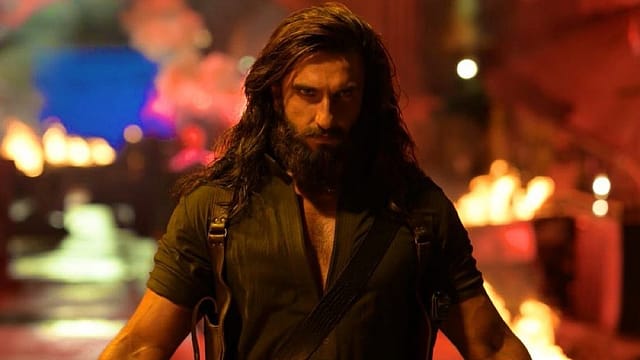
Films like Uri and Dhurandhar are, in many ways, metastasising that myth, selling Indians a version of what decisive retaliation could look like, or might have looked like earlier. But that is not fundamentally different from what Hollywood did in the 1980s, crafting cinematic victories to compensate for frustration with strategists. When Western filmmakers rewrote the narrative on Vietnam it was catharsis; when Indian filmmakers take a leaf out of the same narrative playbook it is propaganda. For instance, the Economist asked: Is Bollywood’s latest megahit propaganda for Narendra Modi? Western commentators are selective in their perspective on Dhurandhar.