Soft Boil: The Architecture of Belonging at Sunder Nursery
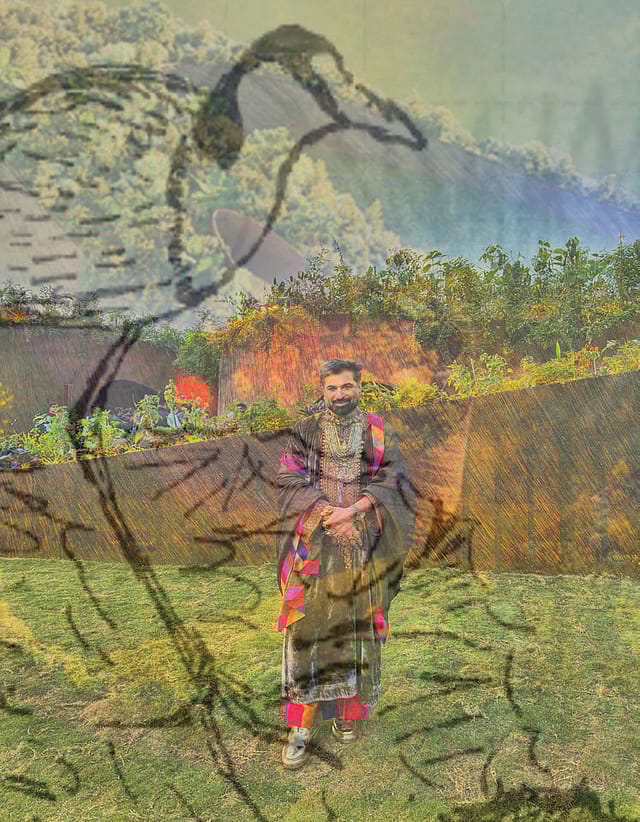
I ARRIVED AT THE Pavilion not by accident, but by invitation—Anita Lal, with her instinct for where thought quietly gathers before it becomes movement, had asked me to come. It felt less like a summons to an opening and more like an invitation into a conversation already underway—between land and line, memory and material, restraint and reverence.
At the heart of that conversation stands Tara Lal whose work resists easy categorisation. She is neither an environmentalist in the slogan-heavy sense nor an artist chasing spectacle. Her vocabulary is subtler, steadier. She speaks in systems, in soil, in species. And yet, what she has brought into being at Sunder Nursery is unmistakably poetic.
Tara Lal’s thinking begins with a question we have forgotten how to ask: What if design listened first? What if architecture learned the language of the land before imposing its own accent? The Aranyani Pavilion does not announce itself. It does not dominate the skyline or demand attention. It waits. It fits. It belongs.
That sense of belonging was mirrored in the crowd that gathered as evening softened into night. The young and the artsy stood shoulder to shoulder with society folk, with old classmates, with people I recognised from their work and others I had never met at all. Curators, designers, patrons, photographers, students, aesthetes— some dressed with studied flamboyance, others with quiet assurance. Strangers became co-witnesses. Difference dissolved into shared awe.
What united everyone was not status or style, but a collective hush—the kind that descends when something feels right.
Under bamboo ceilings that curved like cupped palms, we moved more slowly. The structure’s restraint recalibrated us. In a cultural moment addicted to shouting—bigger façades, louder forms, faster statements—this Pavilion offered an alternative ethic: design as humility. Architecture that does not scream to be seen but murmurs to be felt.
The bamboo did not feel decorative; it felt inevitable. The local flora did not perform sustainability; it embodied continuity. Jasmine, tulsi, neem—plants that carry scent, story, sanctity—were not props but participants. They reminded us that beauty does not need novelty when it has memory.
Around us, cameras clicked—not to extract spectacle, but to archive a mood. What people wore mattered, yes, but how they stood mattered more. Postures softened. Conversations slowed. There was an unspoken understanding that this was not an event to consume but a space to enter with care.
Even the serpents—ancient, sinuous symbols of regeneration—felt less like provocation and more like punctuation. Held gently, photographed thoughtfully, they spoke of cycles rather than shock. Of shedding rather than conquest. Of wisdom that repeats rather than progresses.
Sunder Nursery has, over the years, become synonymous with cultural reclamation—a landscape that proves restoration can be intelligent, not cosmetic; narrative-driven, not nostalgic. The Aranyani Pavilion extends that legacy. It reminds us that the future of Indian design does not lie in louder statements or imported vocabularies, but in attunement.
This is the kind of art that does not demand agreement, only presence. The kind of architecture that does not overwrite history but converses with it. The kind of initiative that gently but firmly suggests: we can do better than spectacle; we can do wiser than noise.
If this is where art is heading—into forests, into forgotten grammars of fitting in rather than standing out—then perhaps we are finally learning what the land has been trying to tell us all along.
Sometimes, the most radical act is not to build higher, but to listen lower.