Return to an Absence: Companionship is not about filling space
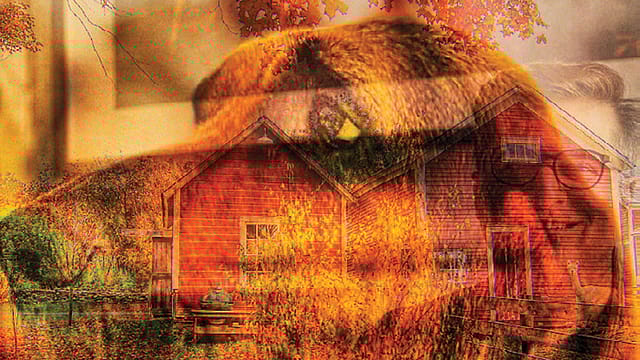
THERE ARE LIVES that arrive quietly and then, without ceremony, become architecture. They hold up the days, steady the nights, soften grief, and brace joy. Jacques Clouseau—Clouseau, my baby—was not just a dog beside me. He was a column in the house of my being. And earlier this week, that column fell. Not cracked—fell. And I have been standing since then, somewhere between movement and disbelief, trying to understand how a life so immense can leave behind a silence so complete.
He came to us not as a replacement, though that is what we tell ourselves when loss is too raw to name. He came after Asha, after the kind of goodbye that rearranges you. Charlie chose him—or perhaps Clouseau chose us through Charlie—another hound, as if love refuses caution. It returns again, asking only that we dare to feel it fully once more.
And what a being he was. A bloodhound with the face of an old soul—those drooping eyes carrying what looked like centuries of knowing. Yet behind that solemnity lived mischief, curiosity, and a joy so pure it bordered on grace. He moved through the world led by his nose, as if scent itself were scripture.
He grew up in Hebron, where the land stretched open, where ponds held the sky and streams whispered. Under Charlie’s patient training, Clouseau became something rare— not just well-behaved, but deeply aware. It took years, but what emerged was not obedience alone. It was character. Gentleness. Restraint.
He never grabbed, never demanded. He waited. Even when instinct pulled at him, he chose patience. And yet, for all that discipline, he remained a hound when it came to love and memory. When Charlie left, Clouseau did not forget. Every new man carried, for him, the threat of replacement. And so he became a quiet thief—of scent. Socks, T-shirts, anything left unattended became his way of saying: you are not him.
It became our joke. But beneath it was loyalty in its most unfiltered form—feral, funny, and tender.
And then there was his love. Not the kind that asks, but the kind that floods. When I returned home, he did not greet me—he unravelled. He cried, trembled, celebrated with a fullness that made you feel both unworthy and blessed.
When I was unwell, he kept vigil as if my fragility were a summons only he could hear. And when those he loved came to see him, his joy spilled into his body in ways he could not contain. We say animals are simpler than us. But that is only because they do not dilute what they feel. In his last years, I was not always there. Life pulled me into distances I thought I could bridge later. I had plans—Alibaug, the land, the return to something whole where Clouseau could come back to the life he was born into. I believed time would wait. But time is not ours to arrange. And earlier this week, it took him, gently it seems, after something as ordinary and sacred as breakfast.
Yoghurt, and then goodbye. How does one make sense of that?
I returned to Delhi, to do what must be done, to return him to ash and memory. And somewhere within me, a promise formed— not out of strength, but surrender—that I may never do that again. Not because love is not worth it, but because it is. Because it costs everything.
Clouseau was not mine in the way we claim ownership. He was a presence that chose to love me—consistently, generously, without condition. And in doing so, he taught me something I am only now beginning to understand: that companionship is not about filling space, but about becoming part of someone else’s foundation.
Earlier this week, that foundation shifted. Earlier this week, I lost my baby. And the world continues. But mine has a hollow where a column once stood—and I do not yet know how to build around its absence.