Iran’s Rage from the Ruins
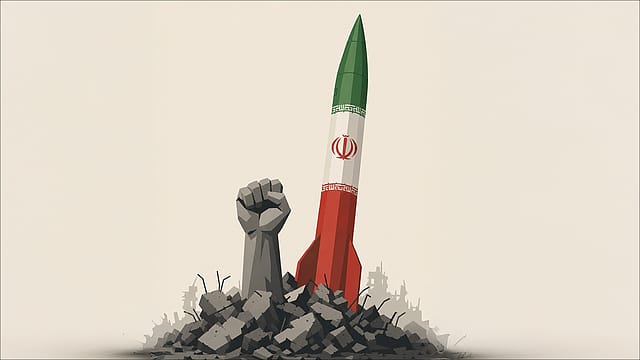
THAT IS WHAT WE HAVE ALL THOUGHT: there was no winner in this war. Both America and Iran lost face: Trump metaphorically; Iran, with the killing of Ayatollah Ali Khamenei, literally. There was only one winner in the narrative battlefield, and that was Iran. A strange mix of anti-Americanism, antisemitism, and a misplaced romanticisation of a civilisation helped a brutal regime sell the image of an underdog still biting. The absence of a supreme cleric to sermonise the victory in the familiar text of perpetual-war-on-the-Great-Satan didn’t stop Iran from turning the triumph in the perception war into post-ceasefire deception. Iran broke the deal because it could afford to do so.
Iran, in its reading of the world after the half-fought war, sees America as a diminished, if not declining, power, its president a fast-talking huckster. It thinks, despite being bereaved and wounded, it can mess with a once-upon-a-time superpower. The Trump of monosyllabic rage allowed himself to be taken lightly, and Iran took the cue from the world. Almost every leader on earth is mastering the art of manipulating the POTUS ego. They are learning to interpret his impulses and discount his intelligence. Iran has dared to mock him.
It has understood Trump’s imperialism correctly: he presides over an imperium the size of his ego. Iran’s return to the Strait of Hormuz as its sole custodian is a direct attack on a president who claims to have won the war. It was challenging the president who had vowed to free the passageway, which is central to his vision of an energy-rich future for America. Trump’s vision, despite himself, has resonated with the economic urgencies of the rest of the world. Iran thinks history is on its side, and the sentiments of a Trump-weary world too. It has nothing to lose as it has already lost most of its leadership.
What it has got intact is a military-Islamic complex built to lethal perfection over more than four decades. It is the only establishment Iran has, and it is so well-entrenched that a war cannot dismantle its organic sprawl, or its faceless leadership structure. Iran’s rage from the ruins that frustrated America only illustrated how a war could be neutralised without the guidance of god’s revolutionary. It was as if a phantom power from Persian folklore was taming the evil on an epic scale. Political Islam’s biggest machine was on autopilot.
It is, still. Trump may claim that America doesn’t need a war to keep the attack on a belligerent Iran going. He doesn’t have a clue about the nature of the beast he is struggling to strike a deal with. Iran is a regime without a singular voice of authority. All its spokesmen have the authenticity of holograms. The narrative war Iran has won allows it to turn martyrdom into national strength, debris into a monument. The faceless regime is free from human accountability; even the religious legitimacy it pretends to have is a revolutionary façade. It is this lethal autonomy of the machine that withstands—and even humiliates—American power.
Its victim, though, is not just America, or the sailor risking his life in the Strait of Hormuz. They pay a price, and the entire Middle East too. An angry Iran, looking for soft targets to avenge American attack, has already made the Gulf a nervous region. Iran always flexed its spiritual and military muscle with the confidence of an imperial state. In practice and attitude, it was one, as the supplier of arms and Islamic ideology to neighbourhood terror organisations with varying degrees of genocidal hatred against the incompatibles. Still, an Iran finding victory in defeat is not just a threat to global peace of mind.
It is a greater threat at home. Trump went to war promising freedom for Iranians from religious dictatorship. That kind of moral idealism, even though not a Trumpian trait, was very much vintage Americanism, in which self-interest aligned with international morality. And that was what those Iranians who dared the regime and ended up in swelling jails—or in the graveyard—wanted. A creaky revolution was insatiable, and like all other revolutions in the past, its maintenance required the blood of the deviant. Trump was an unlikely seller of hope.
The half-finished war needs to be completed within Iran, by Iranians. Trump belied his words—what’s new?—by not making it possible for Iranians to launch their own revolution. One decade after the original Iranian revolution, 1989 happened, when Eastern Europe erupted to the cries of We the People. That was an inevitable finale, and watching the outbreak of freedom from afar were leaders like Reagan and Thatcher—and a Pope, all collaborators of liberation. When Iranians thought their moment had come, there was only a Trump looming over war clouds, too impatient to remember his promise. Predictably, the machine strikes back—and within.