In Defence of Elitism: The remedy is to weed out the culture of entitlement
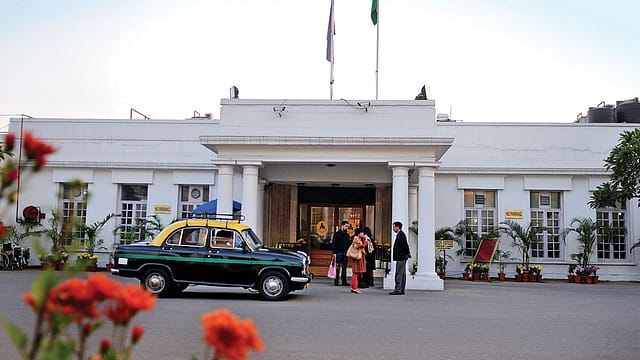
THERE IS NOTHING WRONG with elitism. As long as it is not confused with entitlement. The Government of India’s decision to evict the Delhi Gymkhana Club from its ample grounds in the heart of Delhi is not anti-elite. It is anti-entitlement. The distinction between the terms is important for India. We need more elitism. We need to get rid of entitlement.
By definition, elite symbolises the best. It is the opposite of mediocrity. The elite will always be a small fraction of a society or country. The majority will always lie in lower ranks. But it is the elite that move society and country forward.
We need political elite to lead us. We need administrative elite to govern us. We need business elite to drive our economy. We need scientific elite to make us a nation of innovation.
And we need sporting elite to win us medals and global recognition. The list is long.
Other than elite individuals, we also need elite institutions. Some would argue that higher education is in itself an elite activity given that a minority is able to acquire it. But within that, we need institutions that symbolise excellence, like the IITs, IIMs or AIIMS. Similarly, we need top institutions in the cultural domain, like museums and theatre.
Both elite individuals and elite institutions set a benchmark for excellence and achievement. They act as a motivation for other individuals and institutions to seek betterment. In that way, they create a virtuous cycle which enables progress and growth—of all individuals, institutions, society and country.
The problem arises when an elite gets frozen and insular. When membership depends on inheritance or networks rather than ability and talent. Essentially, when elitism becomes entitlement. There are good reasons why the Lutyens’ Delhi elite is despised from the outside. For one, while India is a Republic, most political parties resemble monarchies—run by the same family over generations. BJP is an exception. The Left would be too, but it is irrelevant. For another, India’s system of permanent bureaucracy means that only those who sat for a UPSC examination in their 20s (and cracked it) are deemed fit to govern the nation. When this insular set is perceived to be enjoying taxpayer-funded largesse, it leads to resentment. But it is against their entitlement. If there was more churn, there would be greater acceptance.
It is this same governing elite (include the armed forces) which have cornered membership of the Delhi Gymkhana Club and pay a very nominal rent for 27 acres of government land. In their professions, unlike politicians, at least civil servants cannot pass their jobs/positions to their progeny. But in the club, they can pass membership. Entitlement of the worst kind, creating a “permanent meritless elite”.
In other institutions, too, there has been a steady erosion of merit-based elitism. Take universities. Reservations are one reason. But appointments to faculty positions based on networks, more than academic merit or publications, again creates a meritless elite.
The danger of such trends is that they fuel anti-elite sentiments and may lead to a disbanding of elitism altogether. Needless to say, that would be a great disservice because the alternative is to wallow in mediocrity. It is an end point which can be reached with extreme anti-elite populism either on the left or right.
The right remedy is to weed out the culture of entitlement, and not just in one or two clubs. At the same time, real elitism should be encouraged, something which isn’t the default in India. To use an analogy from maths, we tend to head towards the least common denominator than the highest factor, that is, towards mediocrity.
A crackdown on entitlement combined with an unleashing of meritocracy will make for a more dynamic polity, society and economy. We need to see more productive elitism, not a protectionist one.