Getting Out of the Indus Trap
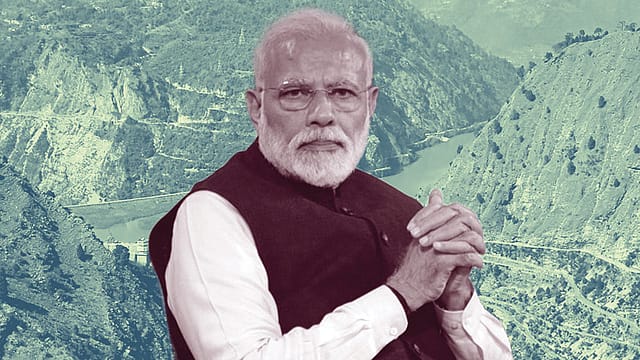
It is becoming clear that India’s decision to place the Indus Waters Treaty (IWT) in “abeyance” after the massacre of 26 people at Pahalgam on April 22 last year is part of the Modi government’s bid to extricate itself from the vexatious pact that provides for third-party arbitration of India-Pakistan disputes for good. Those in the know say the matter engaged Prime Minister Narendra Modi early in his first term and he asked officials to evaluate the treaty and its implications. The initial reports followed the traditional thinking in the Ministry of External Affairs (MEA) along the lines that IWT reflected India’s adherence to international norms and that it had survived the worst of the India-Pakistan relationship. Modi was not particularly impressed by the feedback and the matter rested until the terrorist attack on the Army camp in Uri in 2016 after which the prime minister famously said “blood and water cannot flow together”.
India pulled back on Indus Commission meetings and fast-tracked its hydroelectric projects. The Pahalgam attack proved a turning point and, by all indications, India is in no mood to accept Pakistan’s cynical misuse of the treaty by using mechanisms such as “neutral expert” and the Court of Arbitration to obstruct and delay projects on the Indian side. The view in New Delhi is that the treaty has provided Pakistan with an avenue to insert itself in India’s affairs and thereby raise questions over the status of Jammu & Kashmir. As far as India is concerned, the treaty will have to be significantly revised if it is to retain relevance at all.

India's Action Hero
27 Mar 2026 - Vol 04 | Issue 64
Riding the Dhurandhar Wave
Poles Apart

Poland is seen as part of “new Europe” that has been relatively less affected by the political correctness of Scandinavian nations and advanced economies such as Germany.. Yet, the traumatic impact of Russia’s invasion of Ukraine led the ‘liberal’ Polish government headed by Donald Tusk into taking umbrage of India’s purchase of Russian oil to the extent that it warmed to Pakistan. The public rebuke of visiting Polish Foreign Minister Radoslaw Sikorski by External Affairs Minister S Jaishankar saw the Polish minister making a course correction, agreeing that both India and Poland have been at the receiving end of state terrorism.
Fadnavis at Davos
Maharashtra Chief Minister Devendra Fadnavis left for the World Economic Forum at Davos soon after results to the municipal corporations were announced, indicating that claims of the Eknath Shinde-led Shiv Sena to the Mumbai mayor’s post and the standing committee can wait. While BJP is confident of installing a mayor of its choice, Fadnavis is looking to sell Maharashtra as an investment destination very much bolstered by BJP’s newly gained control over municipalities which are the last mile for land, power, environmental and safety regulatory approvals.
Owaisi Show
The performance of AIMIM in the recent elections to 29 Maharashtra corporations after the outfit won 95 wards, including 33 in Sambhajinagar, signals its growth among Muslim voters at the expense of mainstream ‘secular’ parties like Congress and SP. The results come soon after AIMIM won five assembly seats in Bihar. In the Brihanmumbai election, AIMIM won eight seats and 2.6 per cent vote, upending SP which got two seats and 0.5 per cent vote. The ‘leakage’ of minority votes in close contests is worrying the I.N.D.I.A. bloc as Asaduddin Owaisi’s stock rises.
Pollution Blues
The state of the air quality in the Delhi-NCR region makes it evident that the Graded Response Action Plan (GRAP) mandated under Supreme Court orders has failed, barely making any difference to pollution levels. It is time to go back to the drawing board as restrictions on construction and transport and idling labour finally add costs which builders pass on to consumers. A start can be made, as some experts have called for, by a scientific survey of sources of pollution. The last one was in 2016.
Gor's Plan
US ambassador Sergei Gor’s job is complicated by Addiction Commerce Secretary Howard Lutnick and Trade Advisor Peter Navarro regularly issuing provocative statements about India. But he is exploring all areas of engagement. In Mumbai, Gor met Chief Minister Devendra Fadnavis, RBI Governor Sanjay Malhotra and industrialist Mukesh Ambani. Gor seems serious about pursuing investment opportunities for US businesses even if the India-US trade deal is stuck without clarity about when it might be concluded.
A Juvenile Addiction
A news report about a recently concluded junior sport meet in Faridabad brought to light what sport administrators have been warning about. The toilet and change areas were littered with syringes and spent capsules of Darbepoetin, a drug used to boost redblood cell production in patients dealing with kidney and bone marrow ailments. The purpose is clear enough—to improve energy or oxygen levels. The lack of supervision at age-level competitions is a serious malaise the Sports Authority of India (SAI) has failed to check.