Far from the Tipping Point: Symbolism alone won’t dismantle reservations
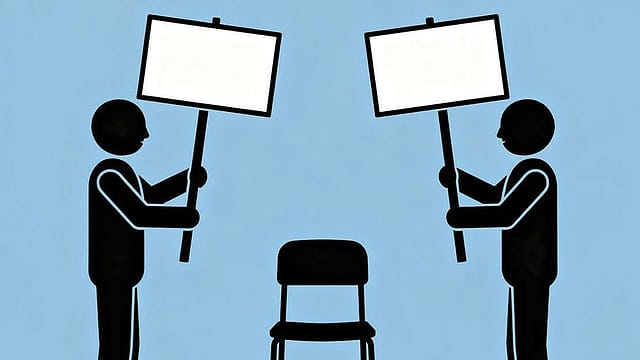
THE Supreme Court had set March 19 for reviewing the UGC regulations which many have called “anti- General Category.” Irrespective of the outcome, the situation merits our attention.
Let’s backtrack a bit.
The proposed rally at the Ram Lila Maidan on March 8 against the UGC caste regulations 2026 turned out to be a non-event. The brouhaha, such as it was, remained confined to social media.
The Delhi Police, who are under the authority of the home ministry rather than the Delhi government, refused permission to the protesters. The authorities blocked entry to the venue, detained or house-arrested several activists, leaders, and journalists en route, and dispersed any gatherings that formed.
General Category (GC) groups have claimed that they felt stigmatised as potentially “criminals by birth” because of the UGC regulations, which pit GCs against all other categories. Let’s call the latter RCs, short for Reserved Categories, which consist of Schedule Caste (SC), Schedule Tribe (ST), Other Backward Classes (OBC), Economically Weaker Sections (EWS), and Physically Handicapped (PH) candidates.
RCs can complain against GCs, but not vice-versa.
But will the GC versus RC issue die a quiet and natural death? Not quite. This is just the beginning. And if my prediction is right, the Supreme Court will only give the government breathing space.
The government will then recalibrate its options.
But, make no mistake, GC the revocation of the UGC guidelines is low-hanging fruit.
For who can doubt that this nascent movement has given the opposition, especially Congress, much cause to rejoice? Bereft of power at the Centre all these years, they have long been seeking an issue to mobilise support against the BJP-led regime. Now, they seem to have found it in the most unlikely of places. In the upper castes, whom they ignored or excoriated as exploiters. Because Congress victories, fewer and far between, have relied precisely on opposite configurations. For instance, in Karnataka, where lower-caste and minority coalitions have brought them back to power. How is it that the classic diversity, equity and inclusion (DEI) party of India is now backing the GCs?
Herein lies the rub. Neither the ruling BJP nor Congress can back GCs openly. And if it is a choice between two hypocrisies, the GCs may continue to choose BJP over Congress.
More importantly, the real issue is not the UGC guidelines, which have little traction in the populace at large. The malaise is much deeper. It is the politics of reservations or, even more profoundly, our caste-based polity itself.
No party, past or present, has been able to rise above, let alone upend it. The experiments of the Swatantra Party (1959–1974) or, on a much
smaller scale, “Students for Equality”, are
salutary. Neither took off because India is simply
not ready for “annihilation of caste”, to invoke the title of BR Ambedkar’s famous treatise.
Instead, caste is the protean and evolving instrument of social solidarity and, indeed, upward mobility. Only birth-based privileges are sought to be reordered, in the name of social justice, to favour the “backwards”.
More disturbingly, in each group’s slice of the pie, the creamy layers hog up a disproportionate portion. That makes the whole reservation system an arrangement of disproportionate appropriation, which is what it was set up to rectify in the first place.
In other words, GCs can agitate all they want but the real question is what can they really get? Not even the protection of the GC quota. Because the GC share of the pie is no quota at all. It is what is left after all the quotas have been spent. Plus, whatever from the leftover that can bitten or nibbled off by the RCs, when the latter do as well or better than the GCs.
Therefore, the fear haunting the GCs is they will lose their precarious claims on the already reduced portions of the pie. In time, more and more RCs, through generations of reservations will climb over their heads, while the places vacated by the latter will be filled by those below them in the RC escalator. GCs, especially the underprivileged ones, will be left wringing their hands in despair.
Yes, there is one thing that the GCs can do. They can swing votes away from the ruling party. What BJP will do to prevent this remains to be seen. What is the rewari that will appease the GCs without giving them anything real or substantial?
Instead, it would be far easier for the powers that be to break up the nascent GC movement by preventing them from becoming a vote bank.
Repression and intimidation. Dividing the leadership. Offering sops such as “lateral entry” for the favoured. Buying off leaders with political positions, sinecures, or policy concessions.
Fragment and weaken the core. Use deception or diversion to tarnish the movement’s image. False narratives, social-media campaigns, character assassination, caste-conflicts, even violence. Depict GCs as anti-Dalit. Silence or choke the media coverage of GC grievances.
Such measures, easier with bot-driven media amplification and AI-generated deepfakes, are rife. Or, when all else fails, procedural and bureaucratic delays are sure to wear down activists. Agitators will grow old, their protests losing relevance, before any action is taken.
The more serious and smart among the student-age GC will, in any case, have no time to agitate. They must work twice as hard to get a seat in any decent public institution. The protesters, willy-nilly, drawn from the more lumpen or possibly jobless lot, are bound to give the movement a bad name.
The government is, thus, sitting pretty. Even so, the rollback of the UGC regulations, whether through judicial intervention or policy revisions, will definitely embolden the GC leaders to up the ante. On the other hand, concessions on “non-issues” such as the UGC regulations will leave the GCs with little to protest about.
The UGC episode is merely one flashpoint in a larger systemic flaw in our body politic which cannot be set right in a hurry. The truth is that, regardless of the outcome of this agitation, symbolism alone won’t dismantle the architecture of reservations.
Nor the growing resentment, even rage, against them.