Exposing A Terror Plot
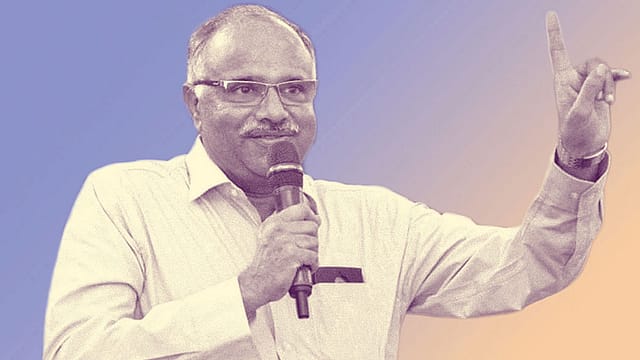
Among the Padma awardees this year is former home ministry official RVS Mani and his story reveals the truth about who actually ‘politicised’ terrorism investigations—the Modi government as alleged by the I.N.D.I.A. bloc or the Congress-led United Progressive Alliance (UPA) when it was in office. Congress, along with other ‘secular’ parties, has accused the BJP governments of misusing anti-terror laws and had opposed the Vajpayee government’s enactment of the Prevention of Terrorism Act (POTA) on grounds that the law would be used to target minorities. When UPA replaced BJP at the Centre, it repealed POTA. But the problem of terrorism did not go away and Central intelligence agencies shared inputs about a Lashkar-e-Taiba (LeT) plot to assassinate political figures leading to the encounter deaths of the LeT module that included Mumbra teen Ishrat Jahan. Here the plot gets interesting.
The home ministry did a complete U-turn on its August 2009 affidavit that had established the terrorist connections of the module in a second submission the very next month. The idea of Congress political managers was simple—to turn the encounter into a case of “extra-judicial” killing of “innocents”. Mani blew the whistle despite being allegedly physically intimidated by an SIT set up to investigate the incident. To the bad luck of those looking to enmesh the Gujarat government then led by Narendra Modi, 26/11 key conspirator David Headley told his interrogators Ishrat Jahan was a Lashkar member, and he repeated the same in a video testimony to an Indian court in 2016. Attempts to implicate the Gujarat government in either the Ishrat Jahan case or the death of criminal Sohrabuddin ahead of the 2014 Lok Sabha polls failed and India’s political map changed after Modi and BJP won a majority.
Standing Room Only

As it turned out, the Republic Day was blessed with clear skies and bright sunshine while the next day was cold and wet. The spectacle on Kartavya Path was witnessed by Prime Minister Narendra Modi and guests of honour, European Commission President Ursula von der Leyen and European Council President António Costa. Modi and visiting dignitaries stood most of the time rather than using the chairs set out for them. The prime minister had a guide to the events in hand to help explain the displays and the cultural presentations. It was an unusual sight with the two EU leaders standing on either side of Modi and observing the parade with apparent interest. The clear day also meant the air power display culminating with a Rafale Vertical Charlie took place without a hitch.
Animal Parade
The animal cohort at the Republic Day parade was a major attraction for the ordinary visitor as well as visiting dignitaries. The use of Bactrian camels for highaltitude patrolling and the newly inducted Indian dog breeds like Mudhol and Rampur hounds along with traditional scouts like Labradors were stars of the pageantry. The selection was not merely for show. The dog squads and Bactrian camels are important for anti-terror operations as well as patrolling remote areas. The modern arsenal used in Operation Sindoor was also accorded pride of place.
The Tharoor Factor
As the next round of state elections nears, there is a degree of jumpiness in the Congress unit in Kerala where the party hopes to return to office. The incumbent CPM-led alliance won an unusual two elections in a row and while it could be ripe for a fall now, the apparent sidelining of Thiruvananthapuram MP Shashi Tharoor has set off undercurrents. Congress bosses do not want any division in the ranks before the crucial election that can break its losing streak but Tharoor’s aloofness and sense of hurt threaten to be a serious complication in a state where contests almost always run close.
Getting Over Trudeau
India’s ties with Canada are on the mend and New Delhi’s trade deal with the EU is making the wheels go faster. Canada sees the FTA as evidence of India’s reliability as a trusted partner. At the India Energy Week in Goa, Canada’s Minister for Energy and Natural Resources Tim Hodgson said, “We’re not going to live in a world where the strongest put tariffs on everyone else. We’re going to live in a world where we believe in free trade and trusted relationships.” The positive vibes show that even badly damaged relations can improve once irresponsible leaders, like Justin Trudeau, are out of the way.
Kaja in Good Humour
The security ties between India and the EU have deepened over the years with agencies like Europol and India’s intelligence outfits in regular touch. EU’s High Representative on Foreign Affairs and Security Policy Kaja Kallas, a former Estonian prime minister, has been critical of India’s import of Russian oil. But in New Delhi this week, she signed a landmark agreement on maritime security, cyber issues and counter-terrorism and said the two democracies can build strong and shared security.
Goyal Bats for India and EU
A press conference to be jointly addressed by Indian and EU leaders and officials became an Indian-only affair after official engagements went into overtime. EU Trade Commissioner Maroš Šefèoviè had to move to his next engagement resulting in the EU team not interacting with the media. Commerce Minister Piyush Goyal, however, took care to explain why the FTA between India and the EU was a win-win and how European nations would benefit from India’s skilled manpower in traditional sectors as well as in emerging technologies.