Dismantling the Regulation Raj: India needs to cut the red tape to become a modern economy
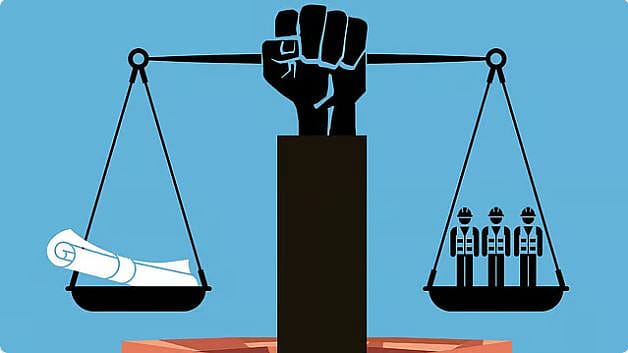
INDIA’S LIBERALISED ECONOMY is anything but liberal. Regulations strangulate it. Compliancesareadeadweight. Indianbusinesses face 1,500 laws, 69,000 compliance protocols, and 6,600 filing mandates. Economists dub this “regulatory cholesterol”. Melting it lies at the heart of transforming India into a modern economy.
Every government has tried to fight India’s regulatory cholesterol and failed. Rajiv Gandhi recognised the problem but could do little about it. The bureaucracy, trained in the art of obfuscation, blocked every attempt by Rajiv’s technocratic ‘A’ team of former corporate executives to improve the ease of doing business.
Atal Bihari Vajpayee fought hard to cut red tape but was soon entangled in it by his own advisers. Manmohan Singh and Narasimha Rao liberalised the tip of the economy but the iceberg beneath remained untouched. Narendra Modi in the first week of his prime ministership called 70 of Delhi’s seniormost bureaucrats to discuss dismantling the web of regulations that had made India one of the world’s most protectionist markets. Modi told the secretaries, joint secretaries and additional secretaries to act without fear or favour. They took him literally at his word. Compliances multiplied.
As the Centre for Social and Economic Progress pointed out in a paper by Prerna Prabhakar, “The government has significantly expanded the use of Quality Control Orders (QCOs), especially since 2020. Although QCOs are intended to strengthen India’s manufacturing ecosystem, they have also generated supply chain disruptions. Certification delays, particularly affecting suppliers of critical components, have increased lead times for manufacturers and exporters. Lengthy testing procedures add further strain to production schedules.”
The problem isn’t restricted to QCOs. Every small and medium enterprise in India complains about the mounting burden of compliances. India’s regulatory cholesterol is inextricably linked with how business has evolved since Independence.
The “Bombay Club” comprised legacy business houses—Tata, Birla, and Bajaj. They lobbied the governmentforprotectionfromforeigncompetition. JRD Tata, the doyen of Indian industry, was close to Prime Minister Jawaharlal Nehru though they came from different ideological streams.
Nehru was a die-hard socialist; Tata, a born capitalist. Nehru told Tata he disliked the word “profit”. Tata replied that without profits, Indian businesses could not play a significant role in nation-building. He added, with modest self-interest, that in order to prosper in newly independent India, business houses needed high import duties to be imposed on foreign goods which had the advantage of superior technology.
The Bombay Club was the progenitor of India’s decades-long socialistic, protectionist economy. It led former Industry Minister George Fernandes in the post-Emergency Janata Party government to throw Coca-Cola and IBM out of India in 1977. Despite the protection Indian business houses received from foreign companies, there were still years-long waiting queues for Bajaj Scooters and MTNL landlines.
Prime Minister Indira Gandhi was as much a socialist as her father. She increased income tax on thehighestincomeslabto97percentin 1967, creating a black-market economy and secret Swiss Bank accounts. Every Indian industrialist had at least one. At an election campaign rally in 2014, Modi said if all the black money salted away abroad over the past 50 years came back to India, it would be enough to deposit `15 lakh in very Indian’s bank account. That statement has for12 years been distorted to imply that Modi had promised `15 lakh to every Indian were he elected. It is testament to the government’s ineffectual communications that this distortion has been allowed to stand for 12 years.
Modi is not a socialist in the Nehruvian mould. But he is not a free-market capitalist in the Reagan-Thatcher mould either. To him the state remains omnipresent. That is why the government’s privatisation programme has floundered. Over the past five years, apart from LIC and Air India, no significant government firm has been privatised.
But dismantling the Regulation Raj is vital for India to live up to its full potential. The government can start by consolidating state-level labour compliances, cutting the number of local building and construction permits, streamlining GST Input Tax Credit (ITC) rules, speeding upenvironmental clearances, strictly enforcing contract timelines, and simplifying rules over statutory laws and municipal licences. Regulatory cholesterol clogs up a nation’s economic arteries. It must go.