CJP Protests: Beware the Street
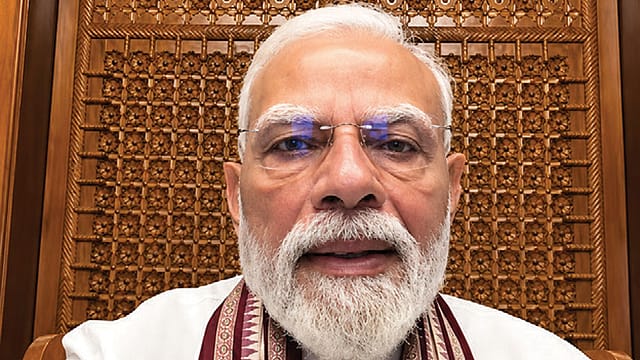
“YOU ARE NOT TALKING TO THE PRIME MINISTER of India; you are talking to a friend.” It was with these words that Prime Minister Narendra Modi kicked off his dialogue with students on February 16, 2018. The setting for ‘Pariksha Pe Charcha’ was the cavernous Talkatora Stadium. The interaction served one purpose: to hear students’ deepest anxieties over make-or-break examinations and spell out mantras to help them face examinations without stress. Of course, “dost Modi” was the perfect person to hear from. He came from that class of Indians who place all their faith in their only calling card: hard work.
Modi’s politics is centred on ensuring India evolves into a meritocracy where talent, working in tandem with exemplary work ethic, is rewarded. One of the greatest threats to meritocracy, and one that naturally induces the greatest stress among deserving, hard-working students, is a system that rewards the shortcut. It was therefore surprising that under the “student-friendly” NDA, money power was allowed for too long to corrupt the examination system. Students, so used to being prioritised by “dost Modi”, quite naturally found it hypocritical for the government to speak of “stress-free” examinations while turning a deaf ear to anguished students demanding accountability over repeated paper leaks. Which is one of the main reasons they protested at Jantar Mantar with such vehemence. Which is also why Prime Minister Modi, recognising the strength of their argument, reached out with assurances and action. That the students called off their stir shows they still trust their “dost”. While Jantar Mantar has been heard, Janata’s mantra is accountability.
And it is here that Modi’s governance needs to be particularly attentive. If the 2024 Lok Sabha setback was, as has been widely argued, a vote against “arrogance”, then 2029 could well become a referendum on the Modi government’s record on ensuring good governance with accountability.
There is no denying that in its twelve years in office the Modi government has worked to better the nation. The list of achievements is exhaustive. The state has often led the way, inviting criticism that under Modi there is “more government”. Modi himself had promised the opposite: “more governance, less government”. Yet there are today more Centrally mandated welfare schemes and greater infrastructure spending than at any time in our history. There is nothing particularly wrong with walking back on the “less government” mantra. But it does mean greater exposure to risk. If the government wants to do more, people also expect it to do better. Sewa, in the public imagination, becomes inseparable from quality of service. If the state is not performing, it has only itself to blame.
So, with the margin for error reduced, is it any surprise that reports of wrongdoing connected with the government have been met with amplified backlash? The outrage over Ram Mandir trustees allegedly being linked to a donation scam is a case in point. The questions were less about the amount involved and more about the proximity of the accused to the wider saffron ecosystem and the reluctance to permit an independent inquiry. In the end, it was the Supreme Court that ordered a court-monitored probe.
There have been other examples where the government’s commitment to accountability has come under focus. Beyond the NEET paper leak controversy, during the farmers’ agitation concerns were often conflated with the motives of fringe elements before a sudden rollback. During the students’ protest, the focus quickly turned to the opposition’s attempts to exploit the agitation rather than the failures that had brought students onto the streets.
Yes, the opposition has undoubtedly been opportunistic. But in democracies, opportunism is the name of the game. There can be no sustained agitation without a cogent grievance.
BJP knows this well. Wasn’t it a direct beneficiary of the India Against Corruption movement? Didn’t it build its national narrative on demanding accountability from the Congress government? Didn’t it make sustained allegations of corruption and governance failure against the Trinamool Congress before finally breaking through in Bengal?
The lesson, therefore, is that governments should never fear accountability. Accountability does not weaken governments. It strengthens them. It restores trust. Jantar Mantar may have been heard. But if NDA wishes to retain the confidence of the Janata, it must continue to listen to the Janata’s accountability mantra.