Beijing’s doctrine of deceit: In Indo-US chill, China dons a velvet glove over an iron fist
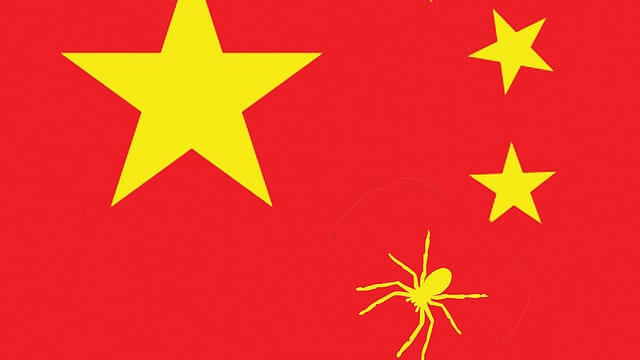
CHINA HAS QUICKLY recalibrated its India incursions from territorial designs on our borders to soft power initiatives deep within the body politic. In the lengthening shadow of Trump tariffs and tantrums—or should I call them “Tantrumps”?—China has been quick to seize the advantage. Some would even say that a subtle, yet alarming, shift is underway in New Delhi’s corridors of power.
Trump’s recent imposition of steep tariffs, doubling duties on Indian goods to 50 per cent and threats to impose even more punitive sanctions, such as a ridiculous 500 per cent tariff on India, have stung India’s national pride, as also the pride of our leadership.
Trump has called India a “major abuser” in trade. Peter Navarro, Trump’s trade czar, crassly accused India’s “Brahminical” class of profiteering from oil deals with Russia at the expense of ordinary Indians. Such non-diplomatic insensitivity has rubbed India the wrong way.
While Trump blusters and the Indo-US relationship festers, Beijing has snatched the opportunity to deepen its influence within the Indian establishment. A stark symbol of the Communist Party of China’s (CPC) India encroachment is actually underway, even as I file this column.
On the eve of Lohri/Sankranti, a six-member CPC delegation, led by a vice-minister, has landed in New Delhi. Not only will they meet with senior BJP members but, what is even more interesting, they have commenced by calling on the Rashtriya Swayamsevak Sangh (RSS) Delhi headquarters, Keshav Kunj, in Jhandewalan.
Meeting with top RSS leaders, including Sarkaryavah (General Secretary) Dattatreya Hosabale, theChinese envoys, as reported, have discussed “inter-party communications” and “advancing ties”. This is no mere diplomatic courtesy; it is the first such high-level engagement since the deadly 2020 Galwan clashes that claimed 20 Indian soldiers’ lives.
RSS, the ideological fountainhead of the ruling Bharatiya Janata Party (BJP), has long positioned itself as a bulwark of Hindu nationalism and self-reliance. In India, the harshest and staunched critics of RSS are the communist parties. But when it comes to China’s global ambitions, CPC’s professedly atheistic and anti-bourgeoisie ideology takes a backseat to its pragmatic and expansionist worldview.
Beijing does not hesitate, it would seem, to court the very core of India’s conservative establishment if it is in China’s national interests.
CPC has been quick to exploit the chill in Indo- American relations to press its advantage. The delegation will also visit the BJP headquarters, signalling a coordinated push to normalise relations despite unresolved disputes on the long, unstable, and unresolved Himalayan border from Ladakh to Arunachal Pradesh.
Compounding CPC’s concerted efforts is the soft-power offensive, exemplified by figures like Jeffrey Sachs. This soft-spoken and kindly seeming Columbia economics professor is somewhat of a United Nations star for his outspoken and longstanding critique of his own country, the US. In India, his equivalent might be “trolled to death”, but he is lionised in some US circles and many so-called “Third World” countries, where knee-jerk anti- Americanism is the default mode.
Sachs, who has praised China’s economic model as a miracle and defended its Belt and Road as superior to Western alternatives, is seen by many as operating in close alignment with CPC and the Chinese state. His frequent appearances on the state-run CGTN, where he critiques US hegemony and urges global cooperation with China on climate and development, serve as intellectual cover for Beijing’s ambitions. I have never heard him criticise China.
It appears that he is suddenly a popular and influential figure in India. He has started praising India as a great power, especially for standing up to the American “bully”. We should beware such flattery, even as we are so hungry from praise from “great white men”. We talk about decolonisation and getting rid of the slavish mentality, but are easily overcome by the slightest affirmation, let alone adulation, from the West.
To return to CPC’s playing tango with RSS, I think India’s establishment must recognise it as a Trojan horse designed to soften resistance to Chinese incursions, from territorial grabs to tech dominance via Huawei and TikTok successors. India should treat such overtures with scepticism; soft power is Beijing’s velvet glove over an iron fist.
Let us not forget that “Guruji” Madhav Sadashiv Golwalkar, the second RSS Sarsanghchalak, long ago warned India about China’s expansionist intentions and perfidy. That, too, well before the 1962 Sino-Indian War. After China annexed Tibet in 1950, Golwalkar highlighted China’s imperialistic and expansionist intentions, criticising Indian Prime Minister Jawaharlal Nehru’s romantic worldview. He repeatedly reminded us that China was an aggressive and untrustworthy neighbour. Let us also not forget how much the ruling establishment criticised the Gandhi family-led Congress for signing an agreement with CPC.
Now, let us flip the coin.
Trump’s ambassador-designate to India, Sergio Gor, has also been making conciliatory noises. On assuming charge last week, he has wasted no time in damage control. The US has pledged to strengthen “the India-US Comprehensive Global Partnership” with its latest invitation to India to join the “Pax Silica”, an initiative to secure tech supply chains. Despite Trump’s bluster, the US has invested billions in India’s defence via multiple deals, like the MQ-9B drones and semiconductor fabs, underscoring a long-term commitment.
I have maintained that while India should retain its strategic autonomy, we should not overplay our swing-state or balancing power advantage. Lest both sides stop taking us seriously or consider us unreliable partners.
We must have a long-range view on Cold War 2.0. Whose side do we want to be? If not openly, then at least selectively. In Cold War 1.0, we were closer to USSR. Do we want to repeat that pattern of siding with the authoritarian Communist bloc?
New Delhi may congratulate itself on playing the field masterfully—from buying discounted Russian oil to joining Quad while engaging BRICS. But there is only so much leverage in trying to game the system.
Leaning too close to China out of a mistaken sense of wounded ego risks compromising sovereignty. Beijing’s track record, from salami-slicing borders to economic coercion against Australia and the Philippines, shows it views partnerships as zero-sum games.
After all, national interest is more important than the national ego.
Let me end on an even more dramatic note. If China sends a swarm of a million drones backed by an indefatigable robot army across our borders, who is going to come to our aid? Let us bear that in mind as we move forward cautiously instead of treading waters noncommittally to stay where we are in between the logjam of superpowers.