Assembly Elections 2026: April Is the Cruellest Month
AS YOU MAY HAVE NOTICED, the title of this column is borrowed from TS Eliot’s The Waste Land, which itself could work as an epitaph for certain states seeking the verdict this summer. In a country more conducive to leaders larger than the fragmented expectation of a people, elections are not a bruising affair for all in the arena. They fight from the sheltering shadows of leaders who loom over a country lost in sighs and slogans. Wasn’t there always a Mrs G to fight for them, to win for them—and to die for them? When she controlled the country, shifting between Mother India and Mother Spurned with magnetic ease, she made every contest, provincial or national, a referendum on her. After her, it is Narendra Modi, just him, who has the most captivating story to tell, with such intimacy and urgency, not allowing a moment of lag. Elections for him are renewal rites, and for those men and women in the fray, the invocation of his name is the part that makes the biggest difference. For most of them, winning is someone else’s gift. And losing is someone else’s fault.
It is different in state elections where provincial totems hold the sway, with their own stories to tell, stories in which the deliverer motif dominates. In Assembly Elections 2026 too, you can’t miss the power of such regional stories, their narrative frisson provided by leaders who have maximised their investment in ancestry—ideological or biological. MK Stalin presides over one of Indian politics’ enduring dynasties, and the image that lingers in his backstory is of those dark glasses through which his father and seasoned scriptwriter (of both films and Dravidian politics) M Karunanidhi saw the future. The son owns it now, refusing to fall despite challenges from a rearmed right and fresh star power. The evolution of Stalin, currently plateaued as Dravidianism’s last hero in Hoka sneakers, is a tribute to a good script that could weather the changes in Tamil kitsch. And far away from him, elsewhere in the Northeast, the rise of Himanta Biswa Sarma is a testament to the nationalist ideal, even if it is disputed by liberals who don’t buy that kind of India. The Assam chief minister is a real winner in the Sangh Parivar because he has reduced the distance between administration, ideology and activism, and the skill will ensure the preservation of the fief.

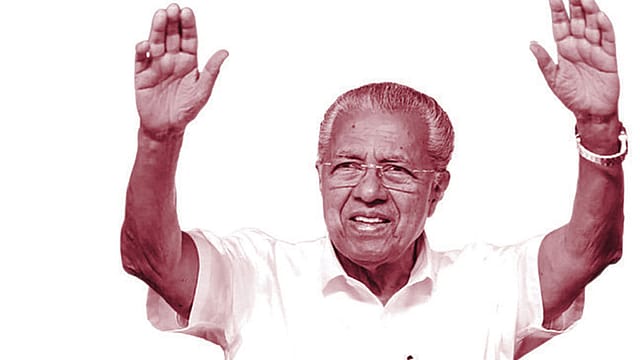
What makes Elections 2026 a blockbuster is the presence of Pinarayi Vijayan in Kerala and Mamata Banerjee in West Bengal, two war-scarred veterans pitted against the impulses of history. Once, these two states were united by ideology and separated by geography. Bengal was ruled by Indian communism’s longest-serving comrade in power; and Kerala’s communists, despite periodic setbacks, never let the sub-rural soviets go. They could lose Moscow, not Malabar. Mamata Banerjee stole not just the sociology of salvation but the social base itself from the fossilised comrades. Vijayan, the last patriarch presiding over the apparat, wants to defeat for good the caricature of the Red Voldemort and finetune his own mythology as the Marximum Marxist. Both are threatened by the same ideology with grassroots appeal and slogans more resonant with the nation. In Bengal, it has always been a floating social base up for grabs. Mamata, when she first appeared as the thunder that shook the east, was more socialist than the average Marxist. The new challenger in the fray has added Hindu cultural identity to the struggle. In Kerala, it is a referendum on an idea that has been sustained for so long by power and fear—and it is still called Vijayan.
Mamata and Vijayan are the last of their kind. Mamata may have lost the original aura of a counterrevolutionary in the crumbling communist fortress. She still retains the marketable vestiges of a grassroots leader, battered but not beaten, who is determined to win. There was a time when she was one of the three women who subverted the power hierarchy, the other two being Jayalalithaa in the south and Mayawati in the north. Together, each with her own style of mass mobilisation, they made the struggle for power a personal saga of overcoming. There is only Mamata now, fighting for a mandate and a memory. Vijayan, and this is likely to be the 80-year old’s last battle, needs to win. It is necessary to concretise his own cult. As the supreme leader who controls the machine and the minds, he faces no worthy adversary. He has no one within the party who can correct or preserve his disputed legacy either. Vijayan, too, is all alone in defending his iconography. In both Bengal and Kerala, it is an election for the defenders to lose.