Will UAE’s OPEC Exit Lower Oil Prices? An Economist Breaks It Down
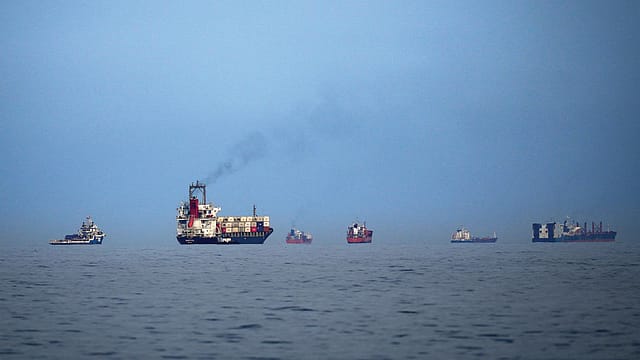
The United Arab Emirates’s decision to exit the OPEC and OPEC+ is being seen as a pivotal moment in global energy politics—one that could reshape oil markets, shift geopolitical alignments, and alter Asia’s bargaining power.
According to economist John Sfakianakis, the move reflects deeper structural and political shifts, from rising Asian demand to evolving Gulf rivalries and growing alignment with the United States.
Will Asian countries gain real bargaining power?
Sfakianakis believes that the UAE’s exit could increase oil supply and give Asian buyers some leverage—but not enough to dramatically tilt the balance.
"There will be more supply, no doubt. They will have bargaining power. But again, you will need more oil. The Asian countries will demand more oil. Oil demand is increasing by about a million to a million and a half every year, and it's mainly coming from Asia and other developing countries. So yes, they could have some bargaining power, but that doesn't mean that they have enormous bargaining power only because demand is increasing. You have bargaining power when demand is decreasing, and prices are falling; you can accommodate that by negotiating harder," he stated.
The Age of Anger
31 Jul 2026 - Vol 05 | Issue 31
A raging generation makes the government relent. What's next?
Despite potential supply increases, structural demand growth—especially from Asia—will likely keep prices elevated.
Sfakianakis noted that global consumption levels, efforts to rebuild strategic reserves, and geopolitical risks such as tensions in West Asia and disruptions in the Strait of Hormuz will continue to support higher oil prices in the near to medium term.
Is the UAE aligning itself with the United States?
Beyond economics, the move signals a geopolitical recalibration. Sfakianakis argues that the UAE’s exit places it firmly in alignment with Washington’s strategic vision.
"I think that it places the UAE on a course to be fully aligned with the US. Also, it's on a course to be fully aligned with what the US would like many Gulf states, including Saudi Arabia, to be in a peaceful agreement with Israel," he said.
He linked this alignment to the UAE’s participation in the Abraham Accords.
"The UAE has signed the Abraham Accords. So that is something that President Trump favours, and he sees this as positive and aligned with what the UAE has done. Saudi Arabia, on the other hand, has not signed the Abraham Accords, and so in his mind, that is an issue. And definitely that deepens the rift between Saudi Arabia and the UAE," Sfakianakis added.
Donald Trump also welcomed the decision, saying it could ease global energy prices.
"That's a good thing for getting the price of gas down, getting oil down, getting everything down. They have it all. He's a great leader, actually. I'm okay. They're having some problems in OPEC," Trump said, referring to UAE President Sheikh Mohammed bin Zayed Al Nahyan.
Is a deeper UAE–Saudi rift emerging?
Sfakianakis highlighted that the UAE’s strategy reflects a fundamental divergence from Saudi Arabia—particularly on the future of oil.
"What is interesting is that the UAE does not necessarily share the view that oil will be important in the decades to come. And so their motivation is to exit OPEC, which is containing their supply potential, and to pump more oil. And this is what they will be doing in the coming years. They will be pumping more oil, that is, the UAE, against what Saudi Arabia wants to do. And the UAE believes that there is a kind of post-oil future, which they need to double down on and diversify, and they need to sell more of what they have in the ground in order to diversify away from hydrocarbons and oil, that is," he stated.
He warned that tensions between the two Gulf powers could deepen further.
"I definitely believe that this basically has created a huge rift, a political rift, between Saudi Arabia and the UAE. But it has been a rift for quite some time. It's nothing unique. They had differences on regional foreign policy issues and on the management of crises. The example, of course, that comes to mind is Yemen, Sudan, differences about Syria and Lebanon, and so forth. But also more existential issues about how to form oil policy, and also how to portray that oil policy through either containment or by extracting more and producing more. I think the rift will continue, and definitely we will see it reverberate either by an exit of the UAE from the Arab League, from the GCC Secretariat, and so forth," Sfakianakis stated.
Even so, he acknowledged Saudi Arabia’s continued centrality in global energy markets, describing it as a reliable and stabilising supplier.
(With inputs from ANI)