Thums Up vs Campa Cola: Can Mukesh Ambani Beat Coca-Cola at Its Own Game?
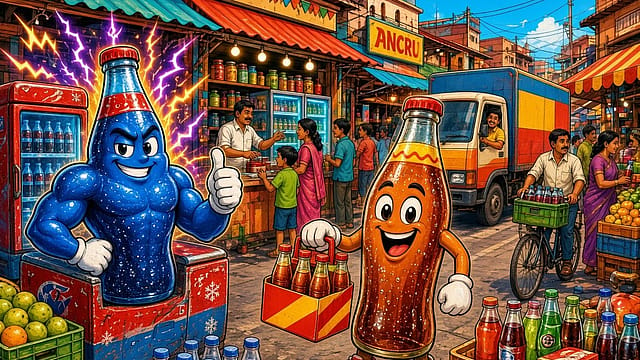
Coca-Cola came back to India in 1993 and bought the cola Indians had spent 16 years getting used to in its absence. Three decades later, the American company’s own bottler has put the outcome on record. In its November 6 IPO filing, Thums Up outsold Coca-Cola by retail value in the states studied in the year to June 2026. The Indian cola it bought is still doing work the famous red label can’t do on its own.
Mukesh Ambani is trying something Coca-Cola itself understood when it returned. An old brand can get people to try your drink. Getting it bottled, delivered and chilled often enough gives them a chance to buy it again. With Campa, Reliance has put a name familiar to one generation on a bottle cheap enough for another generation to try. Can Campa become the cola somebody asks for by name when Thums Up is cold and right beside it?

The Era of Forever Wars
30 Oct 2026 - Vol 05 | Issue 44
Coping with an explosive Middle East
The 60 plants behind the thumbs-up
Thums Up arrived in 1977, the year Coca-Cola left India. When the American company returned in 1993, it went to Parle. Coca-Cola’s annual report that year was unusually candid about the attraction. The deal gave it “instant ownership” of leading Indian soft-drink brands, access to Parle’s network of 60 bottling plants and a way to bring its international brands to market quickly. Thums Up was part of the deal. The plants meant Coca-Cola could get a drink made close to where it would be sold. The brands gave people a reason to look for the bottle in the first place.
There’s a reason the story of what happened next is still retold in Indian advertising circles. Thums Up reportedly became hard to find in some shops after the takeover and that some consumers switched to Pepsi. Coca-Cola denied that it had tried to kill the brand. What the latest filing establishes is where Thums Up ended up. The commissioned market study in the filing ranked it first by retail sales value among carbonated soft-drink brands across ten selected states in the year to June. That group includes Maharashtra, Gujarat and all five southern states.
Reliance bought Campa from Pure Drinks in 2022 and brought it back to Indian shops in 2023. By FY26, Ambani was telling shareholders that Campa had brought in more than ₹4,700 crore in gross sales. On October 30, Reliance reported ₹5,250 crore for its wider beverage business in the first half of FY27 and said Campa led that business. The latter figure covers beverages beyond Campa. It still tells us how quickly the company behind the comeback is scaling up.
Two ways to sell a memory
Thums Up’s February campaign could have asked people to remember an old ad. It hired rapper Hanumankind and Vishal Dadlani to make a new “Taste the Thunder” anthem. Suryakumar Yadav and Rinku Singh appeared in it, and the campaign was timed around the men’s T20 World Cup. The bottler’s filing also points to a biryani campaign that took the drink into a meal people already eat. You can see the work the brand is doing. It keeps the strong-taste identity that makes the drink recognisable and gives younger buyers their own music, players and occasions to associate with it.
Ambani calls Campa “India ka Thanda.” That line gives the brand an identity even for a teenager who has never seen an original Campa ad. Reliance has taken Campa Energy to the IPL, a property that can put the name in front of people who grew up with a very different set of cola choices. Energy drinks are a different purchase from cola. For Reliance, the cricket exposure gives the wider Campa name a chance to become familiar again.
Thums Up also gives Coca-Cola a way to experiment with a taste people already know. It sells Thums Up X Force, a zero-sugar variant under the same brand. The name on the bottle can do some of the work of persuading an existing customer to try a different version. Coca-Cola’s own label and Thums Up can give the company different ways to compete for the same occasion, from a cold drink with lunch to a zero-sugar choice. The strength of the portfolio is the range of reasons people have to reach for one of its bottles.
Campa’s cheaper first sip
The ₹10 bottle makes Campa a decision a customer can make in seconds. In September, a story outlining Campa’s ₹10 push quoted Coca-Cola CEO Henrique Braun who reportedly underlined that competitors sometimes made an “irrational play on pricing.” He was talking about how Coca-Cola handles competitors’ pricing in India. The argument over price is already playing out across different drinks. In 2025, a media report highlighted ₹10 packs for Thums Up X Force, Coke Zero and Sprite Zero in key markets. The new filing shows the bottler intends to expand availability at ₹10 and ₹20 across its portfolio. In the three months to June, it added 458 third-party sales reps dedicated to outlets selling low-priced packs.
A low sticker price has to work for the person selling the bottle too. A shopkeeper buying a case needs to know how much cash it ties up, how fast it sells and whether the distributor will bring the next one before the weekend. For the bottler, making a small plastic bottle lighter saves material on every unit. A small fridge lets the bottler reach a shop with limited space. The filing says its lightweight bottle uses about a third less plastic than a standard Indian 250 ml PET bottle and extends shelf life by more than four months. Longer shelf life gives a slower-selling shop more time to sell the stock. The price war can come down to how many bottles survive a long trip and still sell at a price the customer can pay.
The bottler counted 572,973 branded coolers at the end of June. The filing puts that at roughly a third of the outlets in its network. Those fridges serve its portfolio, which includes Sprite and Maaza as well as Thums Up and Coca-Cola. A Campa rep can offer a shopkeeper an attractive price on a case. The incumbent’s rep can turn up with several drinks the shop already sells, plus an established delivery route and a fridge. Campa was reportedly offering higher trade incentives to distributors. A cut in the price helps the customer today. A better deal for the trade gives the distributor a reason to come back to the same shop tomorrow. Both matter if the brand wants to be available outside the handful of shops already willing to stock it.
Who gets asked for by name?
Coca-Cola has seen what a local favourite can do elsewhere. In Peru it struck a deal with the company behind Inca Kola in 1999. An SEC filing by bottler Coca-Cola Embonor put Inca Kola ahead of Coca-Cola in its Peruvian operating territories in 2003 by share of soft-drink sales volume. India has its own history, but the comparison helps explain why a company that sells Coca-Cola across the world would keep investing in a very different cola. The local brand can be the one people already have in mind with their food.
The Indian IPO comes after the bottler transferred several territories to other Coca-Cola bottlers. Take Ahmedabad. In a ₹1,800 crore deal covering parts of Gujarat and Diu, Kandhari Global took over assets, contracts and employees. Coca-Cola’s permission to make and sell its drinks was separate from the sale. For a Thums Up customer in Ahmedabad, the name on the front of the bottle could stay exactly the same while the name of the company making it changed. Coca-Cola can reorganise who serves a city around a brand people already order. Reliance’s expansion will test how far it can build that habit around Campa, shop by shop.
The next useful comparison is between shops where both colas are regularly available cold, in packs customers can buy for similar money. How fast does the shop order another crate of each? And if Thums Up is out one afternoon, does the customer take Campa, or walk down the road to find Thums Up? Campa can win an extra sale that day. The bigger win comes when the customer walks in asking for Campa the next time.