The Stabiliser of South Asia: The Iran war has enhanced India’s political influence
THE UNFOLDING CRISIS triggered by the US-Iran war has once again underscored a structural reality of global politics: disruptions in West Asia reverberate far beyond the immediate theatre of conflict. What began in late February as a series of calibrated strikes and counter-strikes between Washington and Tehran quickly metastasised into a wider strategic shock, with the disruption of traffic through the Strait of Hormuz emerging as the defining inflection point. For energy import-dependent regions such as South Asia, the consequences were immediate, severe, and deeply destabilising.
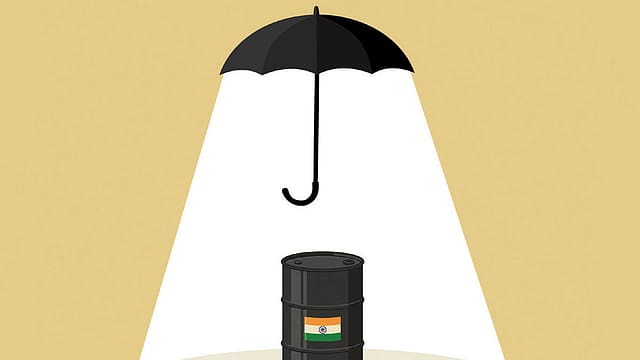
Against this turbulent backdrop, India’s response has been notable, not merely for its scale but for its strategic clarity. Rather than retreat into insular crisis management, New Delhi has leveraged its structural advantages to position itself as a regional energy stabiliser. This is not an accidental outcome; it reflects years of deliberate policy choices aimed at diversifying supply chains, enhancing refining capacity, and embedding energy security within a broader geopolitical framework.
The energy shock triggered by the conflict exposed the vulnerabilities of South Asian economies that remain overwhelmingly dependent on Gulf-origin hydrocarbons. Countries such as Bangladesh, Sri Lanka, and Pakistan found themselves grappling with acute shortages of crude oil, LPG, and refined petroleum products. The consequences were visible across sectors: fuel rationing, sharp price escalations, reduced industrial output, and the imposition of austerity measures, including shortened work weeks and work-from-home mandates. In many ways, the crisis resembled a stress test for the region’s economic resilience— and most countries failed that test.
India, by contrast, was better insulated. As the world’s fourth-largest oil refiner and a significant net exporter of petroleum products, it occupies a unique position in the global energy ecosystem. Its crude import basket, while still substantially linked to the Gulf, is far more diversified than that of its neighbours. With only around 54 per cent of imports sourced from the Gulf—and the remainder coming from a mix of suppliers, alongside modest domestic production—India has cultivated a degree of strategic autonomy that proved invaluable in the current crisis.
Equally important has been India’s refining capacity. Operating at utilisation levels exceeding 100 per cent, Indian refineries have been able to process crude efficiently and generate surplus refined products for export. This capability has enabled New Delhi to not only manage its own domestic requirements but also extend assistance to its neighbours. Its “Neighbourhood First” policy, often articulated in diplomatic rhetoric, has found tangible expression in the current crisis through energy cooperation.
India has been actively responding to requests for energy assistance from multiple neighbouring countries. These responses have been calibrated, balancing domestic imperatives with regional responsibilities. The approach has been pragmatic: upplies are largely commercial, but the political signallingisunmistakable—Indiaiswillingandable to act as a first responder in times of regional distress.
Bangladesh represents perhaps the most illustrative case of this evolving dynamic. Heavily dependent on West Asian imports, accounting for nearly 80 per cent of its energy needs, Dhaka faced severe disruptions as supplies through Hormuz became uncertain. Industrial activity was hit hard, with reports of factory shutdowns and logistical bottlenecks. In response, India
activated the India-Bangladesh Friendship Pipeline, facilitating the supply of diesel from the Numaligarh Refinery in Assam. By late March, approximately 15,000 tonnes had been delivered, including a single shipment of 5,000 tonnes, with plans to scale up supplies significantly in April. This operational cooperation has been complemented by high-level diplomatic engagement. The visit of Bangladesh Foreign Minister Khalilur Rahman to India from April 7 to 9, 2026, marked a critical moment in bilateral relations. As the first ministerial-level engagement following the formation of a new BNP-led government in Dhaka, the visit carried both symbolic and substantive weight and underscored the centrality of energy cooperation on the bilateral agenda.
Rahman’s explicit acknowledgment of India’s support, coupled with requests for increased diesel and fertiliser supplies, reflects a broader recalibration in Dhaka’s strategic outlook. Petroleum Minister Hardeep Singh Puri’s assurance that these requests would be considered “readily and favourably” indicates a willingness on India’s part to deepen this partnership. The discussions extended beyond immediate crisis management to encompass trade, connectivity, and water-sharing issues, suggesting that energy cooperation may serve as a foundation for a more durable bilateral reset.
Sri Lanka presents a different, though equally instructive, case. Already grappling with economic fragility, Colombo was particularly vulnerable to the energy shock. India’s response was swift: approximately 38,000 metric tonnes of petroleum products, including diesel and petrol, were dispatched in late March, covering nearly 45 per cent of Sri Lanka’s immediate shortfall. Delivered through the Lanka IOC framework, this assistance helped stabilise a rapidly deteriorating situation. Nevertheless, the Sri Lankan government has been compelled to implement stringent measures, including fuel rationing and steep price increases—up to 33 per cent for fuel and 40 per cent for electricity.
In Nepal and Bhutan, India’s role has been less dramatic, but no less critical. Both countries are almost entirely dependent on India for petroleum products, with supplies routed through established institutional mechanisms involving the Indian Oil Corporation. Despite the broader regional turbulence, deliveries have continued uninterrupted. Nepal, however, has taken precautionary measures, including reducing its work week and exploring accelerated transitions to electric mobility, reflecting underlying anxieties about supply continuity. Bhutan, by contrast, appears to have weathered the crisis with minimal disruption.
The Maldives, too, has reached out to India with requests for both short-term and long-term energy supplies. While these requests are still under consideration, New Delhi has publicly acknowledged them, reinforcing the perception of India as the region’s principal energy anchor. This perception is not merely a function of capacity; it is also a product of credibility. In moments of crisis, reliability becomes the most valuable currency in international relations— and India has been careful to cultivate it.
At a broader level, the current episode highlights the asymmetry in energy vulnerability across South Asia. Countries such as Pakistan, Bangladesh, and Sri Lanka, with Gulf dependency ranging from 65 per cent to over 80 per cent, have been far more exposed to disruptions in Hormuz. India’s relatively diversified portfolio, combined with its refining strength, has afforded it a degree of resilience that translates into geopolitical leverage.
Yet, New Delhi cannot afford to be complacent. The crisis has reinforced the urgency of further diversification, including deeper energy engagement with the US, Russia and other non-Gulf suppliers. Initiatives in nuclear energy, LPG sourcing, and coal gasification are being accelerated, while domestic measures, such as excise duty adjustments and directives to boost LPG output, are aimed at cushioning the domestic economy.
What emerges from this complex interplay of crisis and response is a picture of India increasingly comfortable with the responsibilities of regional leadership. Its actions have been measured rather than maximalist, pragmatic rather than ideological. By prioritising both domestic stability and regional support, India has demonstrated that strategic autonomy need not be synonymous with isolation.
The ongoing crisis has provided New Delhi with an opportunity to translate its material capabilities into political influence. Through timely energy supplies, diplomatic engagement, and a clear articulation of regional responsibility, India has positioned itself as an indispensable stabilising force in South Asia. Whether this role can be sustained beyond the immediate crisis will depend on a range of factors, but for now, the message is clear: in an increasingly volatile world, India is not merely managing shocks, it is also more than willing to shape outcomes.