Taking India To The World
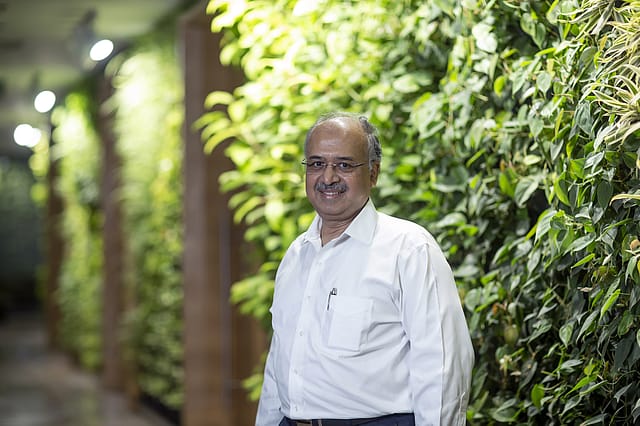
Sun Pharma’s Dilip Shanghvi has done the country proud with his bold $11.75 bn acquisition of U.S.-based Organon & Co. It is the second-largest outbound acquisition by an Indian company. The largest deal was executed two decades ago by Tata Steel in 2006, when it acquired Corus Group for $12.78 bn.
In fact, Sun Pharma has grown aggressively over the years through the build-and-buy route. Between 1996 and 2026, Sun Pharma closed eight outbound acquisitions, with deal sizes varying between $48 mn and $11.75 bn (see table below).

However, its acquisition of Israel-based Taro Pharmaceutical Industries in 2007, when the company was on the brink of bankruptcy, resulted in one of the most protracted and contentious corporate battles, lasting 17 years. The minority shareholders finally relented in June 2024, when Sun Pharma increased its offer price from $39.50 to $43 per share.
The Sun Pharma-Organon deal has brought to the fore the growing confidence of Indian entrepreneurs. It is companies like Sun Pharmaceutical Industries and Dr Reddy's Laboratories that have showcased India’s pharmaceutical capabilities to the world. One can safely say that India is now a pharmaceutical superpower.

Open Minds 2026
26 Jun 2026 - Vol 05 | Issue 26
The power of ideas and arguments in 50 portraits
But beyond pharma, Indian business houses have executed major deals across sectors and, looking at that trajectory, one can safely say that the country has indeed come a long way.
During the Licence Raj era, there were severe fetters on growth. Post the 1991 liberalisation, Indian business houses rapidly expanded overseas through acquisitions. The first major acquisition was made by the Tata Group when Tata Tea acquired Britain’s Tetley in 2000 for $450 million. The deal stunned the world because an Indian company had bought an iconic British brand. Experts say it was among the first leveraged buyouts by an Indian company. Interestingly, the Tatas, during Ratan Tata’s tenure, dominated the outbound acquisitions list (see table below).
Besides the Tatas, it was Aditya Vikram Birla who led India Inc’s global march. One reason he looked outside India was because of Licence Raj restrictions, coupled with his unpleasant experiences with Left-leaning trade unions in West Bengal. Birla is considered the pioneer of India’s outward economic expansion and was among the earliest Indian industrialists to globalise aggressively. Long before liberalisation, the group had a manufacturing presence in Thailand, Indonesia, the Philippines, Malaysia and Egypt.
Once upon a time, multinationals came to India. Today, Indian companies are buying multinationals. What a transformation! India is no longer merely exporting goods. It is exporting brands, capital, technology, talent, culture, management capability and confidence.
Globally, India has indeed arrived. It is the world’s fifth-largest economy and among the fastest growing. What makes Indians even prouder is that Indian CEOs now run several major Fortune 500 companies.
To my mind, besides the Tatas and Birlas, a significant share of the credit for putting India on the world map goes to the country’s information technology giants — Infosys, Tata Consultancy Services and Wipro — which fundamentally changed global perceptions about India. Today, the added advantage is Brand Modi.
Till two or three decades ago, there was a fetish for buying “phoren” products. At the same time, it was embarrassing to sell products carrying the “Made in India” tag because of the clichéd perception of India as a “land of snake charmers”. However, post liberalisation, Indian products have stormed the bastions of established global players with world-class offerings.
With every seventh person in the world being an Indian, the world today needs India economically, strategically and demographically, say geopolitical experts.
Today, Indian products, services and people touch lives across all six continents. In the IT and diamond sectors, India has made a significant impact. The same holds true for brands like Amul, Haldiram's, Dabur, Parle-G, Titan, Tanishq, Lakmé, Royal Enfield, Mahindra Tractors, Tata Motors and Raymond, to name a few.
Let us not forget the influence that personalities like Deepak Chopra, Maharishi Mahesh Yogi and BKS Iyengar have had on Western minds. Today, yoga studios exist across New York City, Paris, Tokyo and Sydney. It is this global recognition that led to June 21 being celebrated as International Day of Yoga by the United Nations General Assembly.
Net net, India is no longer merely looking outward. India is now buying outward, building outward and branding outward.
A growing realisation is dawning upon Indian companies that they need to acquire international resources, a global client base, technological know-how and marketing insights — the very strengths multinational corporations deploy to establish dominance in the Indian marketplace.
While the objective of foreign acquisitions is to attain size and scale, the easy availability of funds has enabled many mid-sized Indian firms to become multinational corporations. There are several stories of Indian promoters successfully turning around seemingly hopeless firms in the U.S. and Europe.
Here, it is worth recalling Prime Minister Narendra Modi’s ‘Make in India’ initiative, which aims to transform India into a global design and manufacturing hub. The drive focuses on fostering innovation, enhancing skill development and building best-in-class manufacturing infrastructure, with the goal of increasing manufacturing’s contribution to GDP and generating jobs.
We are already witnessing its impact across manufacturing sectors. A case in point is the Apple iPhone manufactured in India. Its exports reached a record high of over Rs 2 trillion ($22–23 bn) in FY26 (April–February), making it India’s top branded export and accounting for more than 75% of the country’s smartphone exports. This represents an 85% jump over the 2024 figure.
Finally, one can say that the “Made in India” tag is no longer an embarrassment — it may soon become an envy.