Sensex Crashes Over 800 Points, Nifty Slips Below 23,100 Amid West Asia Tensions
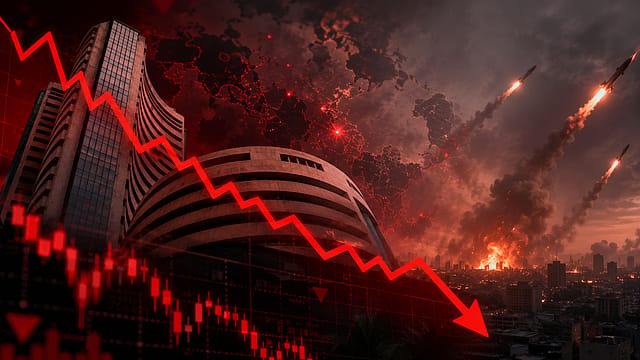
Indian markets continued to tumble into the red on Monday morning as a combination of geopolitical tensions in West Asia and a sharp correction in global technology stocks triggered aggressive selling by foreign investors.
The benchmark indices witnessed heavy losses, tracking a broader sell-off across Asian markets following weak cues from Wall Street over the weekend.
The BSE Sensex plummeted 821.73 points, or 1.11 per cent, to 73,421.61, while the NSE Nifty 50 dropped 286.00 points, or 1.22 per cent, to 23,080.70.

The Health and Wellness Issue
25 Sep 2026 - Vol 05 | Issue 39
“FPIs remain sellers in India, and the combination of escalating tensions in the Iran war and selling in AI-sector stocks is likely to lead to more FPI selling across emerging markets, including India,” Bagga added.
“Last week, FPIs sold a massive Rs 31,000 crore worth of equities. Expect a weak start and some margin calls leading to the unwinding of positions as markets move into heavily oversold territory, which could result in a bounce later in the week," he said.
Can Escalating West Asia Tensions Further Drag Sensex and Nifty Lower?
The immediate trigger for the market downturn came from renewed military conflict between Iran and Israel. The escalation disrupted regional stability and sent oil prices surging, directly impacting import-dependent economies such as India.
"It has been 100 days since the Iran war began, although it was expected to end within two to four weeks, according to Trump. Iran fired missiles at Israel on Sunday," added Bagga.
He said US President Donald Trump called Israeli Prime Minister Benjamin Netanyahu and requested that Israel not retaliate to Iran's latest escalation.
"On Monday morning, Israel struck three Iranian cities with missiles launched from aircraft. Iran has threatened further escalation. Trump is trying to ensure the ceasefire holds. Oil prices have risen sharply, while markets across Asia have fallen this Monday morning," Bagga added.
At the time of filing, Brent crude rose 3.45 per cent to $96.30 per barrel, while WTI crude gained 3.22 per cent to $93.46. Gold, meanwhile, slipped 0.48 per cent to $4,310.03.
"The cues from the US were weak, with the AI-driven rally that had supported markets through the Iran war and the Trump tariff turmoil of 2025 taking a breather. The Nasdaq 100 fell more than 4 per cent on Friday as AI-related market favourites came under pressure," Bagga said.
Bagga noted that some analysts believe investors are raising cash to participate in the mega $77 billion SpaceX IPO.
(With inputs from ANI)