Meta's Muse AI: How Zuckerberg Plans to Monetize Shopping with AI Agents
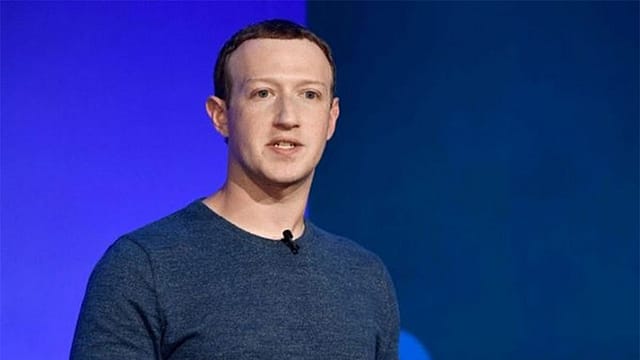
Mark Zuckerberg wants Muse to help people shop. He also wants Meta to earn a share of the business it brings to sellers.
On Meta’s October 21 earnings call, the clearest explanation came in response to a question about timing. Evercore ISI analyst Mark Mahaney asked whether Muse could follow Meta’s familiar approach of building a large audience before making money, given the AI agent’s substantially higher costs.
Zuckerberg’s answer was revealing: “we are going to work on monetization somewhat sooner on this than our normal playbook”.
He linked that urgency to the computing bill and the amount of shopping already happening through Muse. The proposed business combines free access for most users, transaction fees expected to be paid by businesses, and subscriptions for additional capabilities. It would give Meta another way to earn from the purchases its services help generate.

Losing Memory
16 Oct 2026 - Vol 05 | Issue 42
The making of a medical and social emergency
The opportunity is to become part of the transaction itself. The challenge is to make that involvement valuable enough for merchants to pay, trusted enough for consumers to delegate purchases, and economical enough to serve at enormous scale.
HOW DOES ZUCKERBERG WANT MUSE TO MAKE MONEY?
In his opening remarks, Zuckerberg said Meta would build commerce tools that earn fees on transactions Muse helps facilitate. He expected businesses to pay those fees. People wanting more advanced models or additional usage could subscribe, as could businesses seeking extra features.
The answers to analysts’ questions explained the ambition behind that model.
Responding to Morgan Stanley’s Brian Nowak, Zuckerberg described a network in which consumer agents interact with agents representing businesses. “And if you want to buy something, it’s not just navigating to that business’ website. It’s talking to their agent,” he said.
That would bring Meta closer to the point where a customer chooses a product and completes a purchase. A merchant could acquire business through an agent that understands the shopper’s needs, finds an appropriate offer and helps finish the transaction.
Such a service could justify payment if it delivers incremental, profitable orders or reduces the effort involved in selling. Merchants will also need to distinguish genuinely additional business from purchases they would have received anyway.
WHAT DO MUSE’S EARLY SHOPPING NUMBERS SHOW?
Meta said more than 10 million people in the US and Canada had set up Muse personal agents in roughly six weeks. Zuckerberg said about 25% of those who had set it up used it on a given day.
Shopping was the most common use case. Chief financial officer Susan Li specified that more than a quarter of weekly active users used Muse for shopping; Zuckerberg cited an average purchase size above $200 and clarified that the commerce discussion included travel.
Those measures describe different groups and activities. Ten million registrations are not ten million daily users, and the shopping percentage cannot be applied to all registrations to calculate purchasers. Average purchase value also does not establish how frequently people buy, the revenue Meta receives or its margin.
The early figures give management a reason to develop the commerce model. They leave its eventual financial contribution open.
WHY META WANTS REVENUE SOONER
Zuckerberg repeatedly connected Muse’s expansion to computing efficiency. Answering Nowak, he said the expense of running the service was one reason it had not launched globally. Local adaptation and connections to other services were additional tasks.
Meta expects to improve Muse’s compute cost efficiency by more than tenfold over the next year. Li described using spare capacity, smaller models and better inference efficiency. She also said total serving costs were expected to rise as the audience expanded. The company did not disclose Muse’s current per-user cost.
That distinction is central to the business. Delivering a particular capability more cheaply does not guarantee a falling overall bill when more people use the product for more tasks.
Zuckerberg acknowledged another complication: a year from now, users may want more intelligence than today’s models provide. Efficiency gains can make existing capabilities affordable while expectations move ahead again.
Meta has a substantial business financing this effort. It reported $63.1 billion in Family of Apps advertising revenue within $64.6 billion of total quarterly revenue. Its 2026 capital-expenditure outlook was $135–145 billion. That covers company-wide investment, including its core services and AI initiatives; it is not a Muse budget.
The shopping proposition must eventually contribute to that financial equation. Rapid adoption is useful, but each additional user also creates work the infrastructure must perform.
DO BUSINESSES ALREADY PAY A MUSE TRANSACTION FEE?
Zuckerberg outlined the intended model without announcing a universal commission rate or saying every transaction already attracts one.
Shopify’s current documentation makes the distinction tangible. Its Meta integration allows eligible purchases to be completed through Shopify-powered checkout on Meta surfaces, including Muse when available. It says there are no additional fees for selling through Meta’s direct checkout beyond standard payment-processing charges.
That describes a particular existing integration. It does not settle Meta’s future pricing, other commercial arrangements or the economics of every Muse transaction.
Shopify also says merchants remain responsible for fulfilment, returns and customer service. An AI agent may simplify buying, but responsibility for delivering the order and handling problems still needs to be clear.
WHY SELLERS MAY WANT CONTROL OVER AI SHOPPERS
Goldman Sachs analyst Eric Sheridan asked about businesses that might resist agents interacting with their platforms. Zuckerberg said businesses had shown considerable enthusiasm, while acknowledging that adoption would proceed at different speeds.
Li supplied the more qualified explanation. Some businesses wanted to protect their customer relationships. She expected a gradual move towards approved partnerships, authenticated connections to business systems and direct communication between agents. Many near-term experiences would remain AI-assisted.
Meta and Sierra’s Personal Agent Protocol, previewed on October 6, addresses that coordination problem. Sierra describes an approach in which consumers authorise access and businesses define what agents may do through websites, software interfaces or their own agents.
The commercial bargain therefore involves more than access. Sellers will weigh extra demand against fees, control over the customer experience and dependence on an intermediary. Consumers will judge whether delegation actually saves them time and produces acceptable outcomes.
An open technical standard can help participants communicate. It cannot by itself establish attractive commercial terms for everyone.
WHAT THIS COULD MEAN FOR INDIAN BUSINESSES
The call does not establish a Muse launch in India. Its disclosed adoption figures concern the US and Canada, and Zuckerberg identified work still required for wider expansion.
India nevertheless has an existing connection to the strategy through WhatsApp. In May, Meta introduced Business AI for eligible Indian businesses to respond to queries, recommend products, capture leads and book appointments within the WhatsApp Business app. Its May 14 account also described forthcoming payment capabilities; that statement alone does not establish their current availability.
For an Indian merchant, the potential benefit is practical: an assistant could answer questions and coordinate a sale while the owner handles other work. The corresponding financial question is whether additional orders and operating savings outweigh the full cost of the service.
If consumer agents later become an important way to find sellers, accurate catalogues, current stock information and dependable fulfilment could become more important to discovery. That is a possible consequence of the model, rather than evidence that Muse is already reshaping Indian commerce.
WHO DOES A SHOPPING AGENT SERVE?
A business-funded transaction model raises a question of incentives: how does the agent select an offer, and how does payment by a seller relate to that choice? A commission does not establish biased recommendations. Consumers will need clarity about commercial relationships and confidence that the agent respects their instructions.
Meta’s published Muse description says it asks for approval before purchases and does not share conversations or data held in a user’s virtual machine with Meta’s advertising systems. On the call, Zuckerberg separately described an optional connection for people who wanted Muse to improve personalisation across Meta. Those statements should not be collapsed into an assumption that private agent conversations automatically become advertising data.
Zuckerberg’s answers describe an ambitious business bargain: help people get things done, build a network connecting them with businesses, and earn from the value created.
Making money sooner gives Meta another way to fund that network. Making it last will require sellers who value the orders, customers who trust the choices and computing costs that leave something after the purchase is complete.