India's Strategic Shift: Reducing Reliance on China for Rare Earth Elements
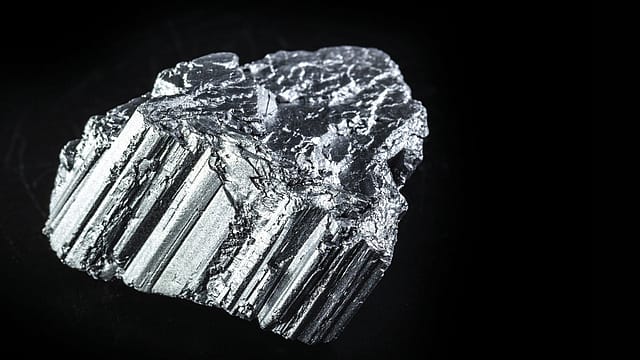
I GREW UP LISTENING TO THE 1970S MOTOWN band Rare Earth and still hum their 1969 hit ‘Get Ready’ off and on. Little did I know that the name of the band would echo in my ears decades later as the world vies for a slice of the critical rare earth minerals to drive almost anything from electric vehicles (EVs) and wind turbines to smartphone screens, catalysts in petroleum refining, phosphors for LED lights and displays, and components in lasers, batteries and defence systems.
In the high-stakes arena of global technology supply chains, it is time for India to ‘Get Ready’ too and seize the opportunity from China, which controls over 90 per cent of global rare earth elements (REE) processing. In many ways, India is unshackling its 90 per cent import dependence for rare earth on China.
Rare earth elements encompass 17 metals, including neodymium, dysprosium, and lanthanum, vital for permanent magnets in wind turbines, EVs, and defence tech. India’s REE demand is exploding: EV production targets under the Faster Adoption and Manufacturing of Hybrid and Electric Vehicles (FAME) scheme and semiconductor missions will double needs by 2030. China’s export curbs in 2025 spiked prices, exposing India’s electronics and auto sectors to disruptions, much like the 2010 rare earth crisis that halted Japanese manufacturing.
China imposed significant export curbs on rare earth elements and related technologies to India in 2025, primarily affecting critical sectors amid ongoing supply chain dependencies. These restrictions, announced in phases from April through October 2025, covered elements like dysprosium, terbium, and yttrium, along with a 0.1 per cent threshold rule requiring approvals for products containing even trace amounts. While some earlier curbs on items like fertilisers were lifted by August 2025 following diplomatic talks, the rare earth measures persisted into late-2025, exacerbating India’s import reliance.
China’s controls expanded throughout 2025, banning exports of rare earth processing technologies and scrutinising components for automotive, electronics, and defence use. Phased implementation hit on November 8 and December 1, 2025, targeting 12 elements and extending to extraterritorial products made with Chinese materials. India imported 93 per cent of its rare earth magnets from China in FY24-25, with stockpiles lasting only two-three weeks post-restrictions.
So, India’s foray into rare earth elements has to align with Atmanirbhar Bharat, positioning REEs as a “strategic test case” for critical minerals security. The National Critical Mineral Mission (NCMM), launched in 2024, drives exploration with 195 Geological Survey of India (GSI) projects, including 35 in Rajasthan. Reserves cluster in beach sands (monazite) along Kerala, Odisha, and Tamil Nadu coasts, plus inland sites like Visakhapatnam and Kerala’s Travancore.
NCMM is a strategic government initiative launched to secure the country’s supply chain for critical minerals essential for clean energy, defence, and high-tech industries. Announced in the Union Budget 2024-25 and approved by the Cabinet in early 2025, it operates from FY24-25 to 2030-31 with an outlay of ₹16,300 crore and expected investments of ₹18,000 crore. The mission covers the full value chain, from exploration and mining to beneficiation, processing, and recycling of critical minerals like lithium, cobalt, nickel, and rare earth elements. Key goals include reducing import dependency—especially from China—through intensified domestic efforts by GSI, which plans 1,200 exploration projects, and overseas asset acquisitions by PSUs (26 mines) and private firms (24 mines).
India’s REE journey began with Indian Rare Earths Limited (IREL, formerly IREL India), a state monopoly under the Department of Atomic Energy (DAE) since 1950, processing monazite for thorium fuel. Production stalled at approximately 2,000 tonnes annually due to Atomic Energy Act restrictions treating monazite as an atomic mineral.
Headquartered in Mumbai, IREL today operates key facilities, including a Rare Earth Division at Aluva (Kerala), mineral separation plants at Chavara (Kerala) and Manavalakurichi (Tamil Nadu), and a Rare Earth Extraction Plant at OSCOM (Odisha). It produces mixed rare earth chloride, high-purity rare earth oxides, and exports to countries like the US, Europe, and Japan, with a processing capacity of around 10,000-11,200MT annually. IREL remains India’s primary rare earth producer, supporting strategic needs amid global supply concerns from China. Initiatives include capacity expansions at OSCOM, a desalination plant, and partnerships for rare earth magnet manufacturing under government schemes.
Alongside, pivotal reforms have unlocked progress. The Mines and Minerals (Development & Regulation) Amendment Act, 2023, delisted lithium, niobium, titanium, and others from atomic minerals, enabling private entry and exploration licences for deep-seated deposits. In September 2025, the Ministry of Environment exempted critical mineral projects from public hearings for national security, fast-tracking clearances via expert committees.

In November 2025, the Union Cabinet approved the Scheme to Promote Manufacturing of Sintered Rare Earth Permanent Magnets. The ₹73 billion ($800 million) scheme targets 6,000MTPA integrated REE Permanent Magnet (REPM) capacity over seven years, offering capital and sales incentives to meet doubling domestic demand. Budget 2026 eyes further: a Rare Earth Exploration Fund, monazite delinking from atomic laws, tax breaks, and assured offtake to de-risk private investment. As Budget 2026 looms, this push signals a pivot from vulnerability to value-chain dominance, blending domestic mining revival, international partnerships, and tech innovation.
IREL leads, expanding Odisha’s OSCOM plant for rare earth chloride and ramping up Kerala’s Chavara facility. It aims for 10,000 tonnes separated REE oxides by 2027 via new REPM plants. Coal India, traditionally a fossil fuel giant, is pivoting aggressively too: its subsidiary, Bharat Coking Coal (BCCL), is eyeing REE mining partnerships in Australia, Russia, Argentina, Chile, and Africa, funded by a 147x oversubscribed IPO. BCCL’s Chairman Manoj Kumar Agarwal confirmed plans for investments and partnerships in rare earth metals, funded partly by the company’s oversubscribed IPO that raised about $119 million. The push accelerates amid China’s export curbs on rare earths, impacting sectors like steel, auto, and clean energy.
Another PSU, Gujarat Mineral Development Corporation (GMDC), leads India’s rare earth efforts at the Ambadungar project in Gujarat. Recent technology transfer from BARC enables processing of ankeritic ore into mixed rare earth concentrate. This supports India’s critical minerals strategy for magnets in EVs and renewables. Ambadungar holds one of India’s largest rare earth deposits, targeting 12,000 tonnes of rare earth oxides annually by FY2028.
Again, Khanij Bidesh India Ltd (KABIL) scouts overseas, securing lithium deals in Argentina and MoUs in Australia. KABIL plays a key role in securing rare earth elements and other critical minerals for India through overseas acquisitions. This joint venture of government enterprises like NALCO, Hindustan Copper, and MECL targets supply chain resilience. KABIL identifies, explores, and procures strategic minerals abroad, including lithium and cobalt, with rare earths gaining focus due to India’s limited domestic reserves. It supplies these primarily to meet Indian industry needs, supporting initiatives like Make in India.
IN THE PRIVATE SECTOR, the government promotes private participation via production-linked incentives for magnets, tech transfer from Non-Ferrous Materials Technology Development Centre (NFTDC), and auctions for thorium/monazite blocks. This addresses China’s export curbs, with plans for public-private partnerships (PPP).
Here, Trafalgar Rare Earth Alloys (TREAPL) partners IREL for Odisha beach sand mining. The Trafalgar Group operates from the UAE and India and focuses on EPC projects, industrial solutions and rare earth processing. Incorporated in Haryana in 2023, TREAPL targets the domestic market amid growing demand for EVs and defence magnets.
Meanwhile, Adani and Vedanta groups explore REE processing.
The Adani Group is betting big on rare earth in Andhra Pradesh, where it plans to develop Visakhapatnam as a rare minerals cluster hub, tapping beach sands for high-value minerals used in EVs, defence, and renewables. The group submitted a ₹23,000 crore proposal for an integrated Titanium & Rare Earth Complex, focusing on titanium processing, rare earth separation, refining, and advanced materials manufacturing. The project promises around 20,000 jobs and export-oriented products, reducing India’s reliance on China for these minerals. While Adani’s current mining operations focus on coal and iron ore in states like Chhattisgarh and Odisha, the rare earth push marks expansion into critical minerals.
Vedanta, too, through its subsidiary Hindustan Zinc, is actively pursuing REE production in India to bolster national self-reliance in critical minerals. The company secured a key monazite mining block in Uttar Pradesh via government auction, targeting elements like neodymium for permanent magnets used in EVs and renewables.
Again, companies like JSW Rare Earths are entering REE processing and magnet production, supported by government schemes like the ₹7,280 crore Rare Earth Permanent Magnet initiative.
JSW Group, a major conglomerate, has shown strong interest in India’s rare earth sector to reduce reliance on China-dominated supplies. Chairman Sajjan Jindal has publicly urged greater domestic exploration of rare earth minerals, citing India’s untapped reserves amid geopolitical exclusions like the US-led Pax Silica initiative.
There are other players like Mahindra & Mahindra, a leading automaker, which has been addressing rare earth magnet shortages critical for EV production amid China’s export restrictions. The company is exploring local manufacturing partnerships and engineering alternatives rather than direct involvement in rare earth mining. After China’s export curbs in 2025 disrupted supplies for EVs and auto components, Mahindra secured alternative sourcing for nine months and inventory using substitutes like ferrite materials and light rare earths. Mahindra and auto parts maker Uno Minda are evaluating domestic rare earth magnet manufacturing in India to reduce China’s reliance, pending government incentives and raw material access.
Today, India is countering China via ‘friendshoring’, or sourcing raw materials, components, or manufacturing from trusted partner countries rather than adversaries or low-cost rivals. Coal India’s international forays, for instance, leverage oversupply risks from Beijing’s dominance, while KABIL’s Minerals Security Partnership (MSP) entry aligns with the US, Australia and Japan under the Quad Critical Minerals Initiative.
Furthermore, the joint statement by US President Donald Trump and Prime Minister Narendra Modi in February 2025 marked a significant deepening of US-India ties through the launch of the U.S.-India COMPACT initiative that boosts MSP collaboration among other things. The US Export-Import Bank (EXIM) is actively financing overseas projects involving REEs to diversify supply chains away from China’s dominance, with plans for up to $100 billion in investments targeting critical minerals including REEs. India has emerged as a potential hub for REE processing amid US strategies to build allied networks.
India and Australia, too, have initiated a Critical Minerals Investment Partnership in 2022, evolving into joint ventures for REE sourcing, refining, and processing as of last year. An interim free trade agreement signed in July 2024 has deepened critical minerals cooperation, including REEs. A November 2025 trilateral pact with Canada further supports secure supply chains.
Japan, too, is in the fray. IREL has engaged Toyotsu Rare Earths India, a Toyota Tsusho subsidiary, for introductions to Japanese magnet manufacturers, including discussions on establishing production facilities in India. The company can supply 400-500MT of neodymium oxide annually, which partners could process into magnets for return to India.
DESPITE INDIA’S NEWFOUND zeal for REE discovery, the country faces significant hurdles in developing its rare earth mining sector. India accounts for the world’s third-largest reserves of rare earths (approximately 8.52 million metric tonnes). But production remains low, at around 2,900MT per year, less than 1 per cent of global supply, due to multiple interconnected challenges.
Outdated infrastructure and limited mining capacity restrict output from monazite-rich beach sands in states like Kerala, Odisha, and Tamil Nadu. Also, rare earths are often treated as byproducts with minimal private sector involvement. This results in heavy reliance on imports, mainly from China, exposing India to supply disruptions.
Again, strict atomic regulations govern deposits containing radioactive thorium, complicating approvals and limiting exploration to government entities. Environmental clearances under Coastal Regulation Zone (CRZ) norms and detailed impact assessments also cause delays.
Though India excels in initial extraction, it lacks downstream facilities for refining, alloying, and magnet production. Midstream processing demands advanced technology, which is underdeveloped, forcing exports of raw concentrates.
Mining coastal sands risks soil degradation, water contamination, and radiation hazards from thorium waste. Local protests, as seen in some Tamil Nadu projects, highlight social concerns and ecological damage. Safe disposal and rehabilitation require substantial investment and oversight.
Finally, high capital costs and long gestation periods (up to 15 years) deter investors for integrated facilities. Besides, geopolitical vulnerabilities from Chinese restrictions amplify price volatility.
From 2,900MT a year, demand for REE in India is expected to soar to 8,220MT by 2030. Discoveries like Rajasthan’s Bhati Kheda hardrock block only enhance prospects for scaling up.
India’s REE foray isn’t mere mining; it is reindustrialisation. For, there is the proverbial pot of gold waiting at the end of the rainbow as lyrics from another Rare Earth classic ‘Born to Wander’ wafts in from 56 years ago: “But I gotta chase my dream, girl / Like a river to the sea, yeah / I gotta find the rainbow / ‘Cause it’s waitin’ out for me, yeah”.
After all, by 2030, self-reliance could power 30 per cent EV penetration, semiconductor hubs, and defence autonomy, turning China-Plus-One from slogan to reality.