EXPLAINED | Why Did Warren Buffett’s Successor Spend $9.6 Billion Buying Berkshire’s Own Stock?
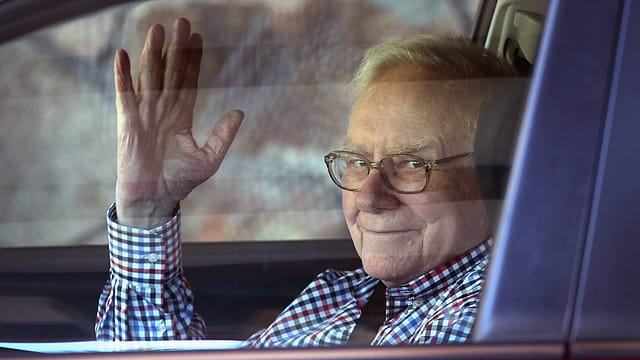
Berkshire Hathaway disclosed on November 7 that it had spent about $9.6 billion buying its own shares between July and September. Greg Abel, who took over as chief executive from Warren Buffett in January, now decides when to buy under a policy that calls for him to consult Buffett, the chairman. Berkshire had gone through all of 2025 without buying back any shares.
Berkshire owns the insurer Geico and the BNSF railroad, among dozens of businesses. Its operating earnings fell almost 6 per cent from a year earlier to $12.7 billion as insurance profits weakened. That same quarter, it put more money into buying its own stock than it paid to acquire the US homebuilder Taylor Morrison. Why would it spend that much on a business its shareholders already own?

The Era of Forever Wars
30 Oct 2026 - Vol 05 | Issue 44
Coping with an explosive Middle East
What does a buyback do?
It lets a company use its cash to buy shares from investors willing to sell. Berkshire can buy its Class A and Class B shares in the market or negotiate directly with sellers. The shares it buys become treasury stock, meaning Berkshire holds them and they no longer count as shares outstanding. There are then fewer shares among which to divide the company’s future earnings.
The quarter-end counts show the change. Berkshire converts both share classes into a common unit for this calculation, treating 1,500 Class B shares as the economic equivalent of one Class A share. On that basis, the number outstanding fell from 1,431,693 at the end of June to 1,418,900 at the end of September. That is a drop of about 0.9 per cent. An investor who kept the same holding owned a slightly larger percentage of Berkshire at the end of the quarter.
Why did Greg Abel think Berkshire was worth buying?
The company’s rule gives us the best answer available. Abel can authorise a buyback when, after consulting Buffett, he judges the price to be below his conservative estimate of what Berkshire is worth. Investors call that estimate intrinsic value. It is a judgement about what the businesses and investments are worth, based in part on the cash they can generate over time. Berkshire has disclosed its purchase prices. It has kept its estimate of value private.
Abel had already set out his thinking in his first annual letter as CEO. He said Berkshire would repurchase stock when the price offered a way to increase value per share for the people who stayed. He also said the company could buy large blocks directly from major holders. That leaves room for a big purchase in one month and very little in another.
What did Berkshire actually pay?
The filing gives an average price for each share class in each month. Class B purchases averaged $496.24 in July, $503.99 in August and $506.64 in September. Multiplying each month’s prices by the shares bought in both classes puts September’s spending at roughly $5.4 billion, more than half the quarter’s total. Berkshire spent about $850 million in August. The biggest month was also the one in which it paid the highest average prices of the quarter for both classes.
Reuters reported about $2 billion in additional October repurchases. The quarterly filing separately says some September purchases were paid for in October. Those September trades are already in the $9.6 billion. The next filing will give investors a fuller look at October’s purchases and prices.
How can a bigger stake be worth less?
The company gives up cash to shrink the share count. Imagine a business worth ₹1,000, including its cash, with 100 shares. Each share is worth ₹10 in this example. If the business spends ₹80 buying 10 shares at ₹8 each, it has ₹920 of value left across 90 shares. Each remaining share is worth about ₹10.22. Pay ₹12 a share for those same 10 shares and the value left is ₹880, or about ₹9.78 per remaining share.
In both cases, the investors who stay own a bigger percentage of the company. Only the cheaper purchase makes each share more valuable in this example. A buyback can lift earnings per share by shrinking the share count, even when the underlying businesses earn the same amount. The price paid tells you whether the company got a good deal.
Why buy Berkshire instead of another business?
Buying stock is one of several ways Abel can use Berkshire’s cash. The company paid roughly $9.4 billion for Occidental’s chemicals business in January and $6.8 billion for Taylor Morrison in July. The buybacks give Berkshire another option when Abel thinks its own shares offer better value than the alternatives. The quarter shows he used both routes.
Berkshire also has to keep money available for insurance claims and other commitments. At September 30, its insurance and other businesses reported $352.3 billion in cash and near-cash holdings, including short-term US government debt, after accounting for September purchases settled in October. Its policy bars a repurchase that would take consolidated holdings of cash, equivalents and Treasury bills below $30 billion. That is the minimum for the programme, rather than a spending target.
How did Infosys do it?
Infosys completed a ₹18,000 crore buyback in 2025. It offered eligible shareholders ₹1,800 a share through a tender, which meant they could offer their shares back at a declared price within a set window. It accepted and cancelled 10 crore shares. Berkshire’s programme leaves the timing and price of purchases to management under its valuation rule. For shareholders, the useful comparison is how much the company paid and what that payment left behind for each share.
Will Abel keep buying at higher prices?
Berkshire’s next results filing will show how many shares Berkshire bought each month and the average prices it paid. That matters because Reuters reported that Berkshire shares reached record highs in the week of the results. Abel’s test applies at every new price. If the company keeps buying, investors can see how much it was willing to pay. If buying slows, the filing will show the change, while the reason may still require an explanation from Abel.