Philosophy: The Fallacy of Hope
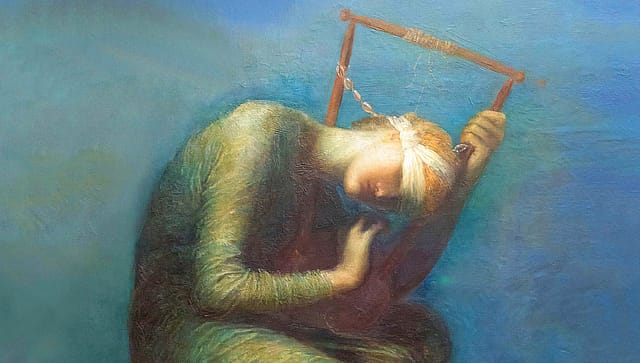
HOPELESSNESS EXISTS ONLY FOR THOSE ADDICTED TO HOPE. IF YOU AVOID falling in the traps of hope, you will be safe from hopelessness. Then you will discover there can be serenity and even happiness. Without hope. Asian thought has preached this for centuries, yet, lately, some Asian thinkers seem to forget this important lesson. They seem to stumble more and more often on the allure of hope, which is also the typical feeling that can emerge when a year ends and a new one begins, and we feel compelled to hope for a better one.
However, even some European thinkers have long been aware of the dangers of a path strewn with the blossoms of hope. When asked why he had declared that as you age you become more cheerful, Italian poet and intellectual Pier Paolo Pasolini answered: “Because when you have less of a future, you have less hope, and this gives you great relief.”
Hope is not universal. It’s a strongly Western construct, rooted in a prevailing branch of Christian theology and on the Enlightenment’s faith in progress.
To embrace hope as a moral obligation is to remain captive to frameworks that mistake their own psychological architecture for human nature.
The true heroic act is the non-hopeful, clear-eyed confrontation with the present, rather than the hopeful quest for an imagined future victory.
Hope, as the West understands it, descends from Christian eschatology. It’s the promise of salvation, the kingdom to come, the resurrection that redeems all suffering.
In Christianity, hope has become a value that is not merely permitted but commanded. It’s the theological virtue that bridges the chasm between a fallen present and a perfected future. Saint Paul wrote that “hope does not disappoint,” binding the faithful to what is not yet, tied to a tomorrow that justifies today’s pain.
This Christian temporality, or the constant deferral of fulfilment, permeates secular Western thought with the persistence of a genetic code. Enlightenment philosophies of progress, Hegelian dialectics, Marxist visions of historical materialism, even liberal dreams of expanding rights and freedoms: these are all structured by hope, by the conviction that history moves towards something better, that our striving will be rewarded in time.
Yet for much of the world's philosophical traditions, hope is not a virtue but a trap, not a solution but the problem itself. In Buddhism, hope—asa—is a form of tanha, the craving or thirst that generates suffering. The Second Noble Truth teaches that suffering arises from desire, from our insistence that reality should be other than it is.
Hope is simply desire projected into the future. It’s the refusal to accept the present moment in its fullness and its pain. The Buddhist path does not run through hope but through its dissolution. Liberation, nirvana, comes not from hoping for a better future but from extinguishing the very mechanism of craving that makes hope possible. The Dhammapada states: “Those who are free from selfish attachments, who have mastered their senses and passions, enjoy peace.” This peace is fundamentally incompatible with hope, which always involves attachment to what is not yet, to what may never be.
Daoist philosophy offers a parallel insight, though in a different key. The Daodejing teaches wu wei, effortless action, the art of responding to circumstances without imposing desires upon them. To hope is to assert the ego’s will against the flow of dao, to demand that reality conform to our expectations rather than dancing with what is.
Zhuangzi wrote of the sage who “roams freely” precisely because he has no fixed outcomes in mind, no hopes to defend or mourn. Freedom, in this view, is not found through hoping for change but through releasing the need for any particular change to occur.
In Vedantic philosophy, hope is part of the illusion of maya, the veil that keeps us from recognising the eternal present of brahman. So long as we hope, we are locked in the world of becoming, blind to the truth of being. Nisargadatta Maharaj taught: “Wisdom lies in never forgetting the Self as the ever-present Source of both the experiencer and his experience.” To hope is to forget this, to imagine that fulfilment lies somewhere other than here, sometime other than now.
These are not nihilistic philosophies, despite how they may sound to Western ears trained to hear any critique of hope as some form of depressing and fatalistic despair. Rather, they describe a different relationship to action and to the world: one that does not require the fiction of hope to sustain ethical life. They propose that we can act, create, resist, and love without the crutch of believing things will improve, without the narcotic of imagining ourselves on the right side of history.
Hope operates through temporal displacement, and this is its fundamental violence. When we hope, we project ourselves out of the present and into an imagined future. We do not inhabit what is; we dwell in what we wish will be. Consider the mechanics: I love you, but you want to return to your ex. I hope you’ll come back to me. This hope is not love; it is suffering disguised as love, desire masquerading as devotion. I lack what I desire, and in my imagination, I possess what I might gain.
Hope keeps me suspended in this lack, unable to accept the present reality, unable to live without the fantasy of fulfilment. People who hope are never where they are; they are always somewhere else, in a future that doesn’t exist, nursing a possibility that may be nothing more than self-deception.
This is how hope always functions, in love and in politics, in personal life and in collective struggle. It trains us to wait rather than to act, to defer rather than to engage. In hoping, we exchange the challenging work of presence for the seductive comfort of fantasy.
OPE IS SORT of a spiritual credit card: we purchase emotional comfort now by mortgaging the present to an imagined future, accumulating a debt that can never be repaid because the future never actually arrives. It is always coming, always just beyond reach, always justifying today’s inaction or today’s endurance of the unendurable.
Hope is a concept which has been misconstrued within Christian theology as well. In the Bible, Jesus Christ often speaks of faith and love, but he is never recorded as having pronounced the word ‘hope’.
One could argue that hope actually undermines the acceptance dictated by faith in the divine. Italian poet Dante Alighieri understood something that modernity has forgotten, something that sits uncomfortably with our compulsory optimism. In Paradise in the Divine Comedy the blessed do not hope. They contemplate the present beauty of God without reference to past regret or future longing. They are beatified not because they hope for something beyond themselves but because they are fully rooted in the now.
Beatitude does not come through hope but through its transcendence, through the capacity to notice, accept, and celebrate what is, even when what is includes pain. The blessed have moved beyond hoping because they have discovered something hope always obscures: the sufficiency of the present moment.
Similarly, in the Bhagavad Gita, Krishna doesn’t tell Arjuna to “hope for the best.” He tells him to act without attachment to outcomes, nishkama karma. Devotional traditions like Bhakti allow hope in divine grace, but the ideal is surrender, not at all the anxious expectations feeding Western neurosis. Hindu texts like the Vivekachudamani suggest that the pinnacle of spiritual existence is to be “perfectly hopeless”, without expectation for a separate, eternal life in the material sense. It is not despair, but a state of complete detachment, vairagya, and self-sufficiency, where one is not bound by the anxiety of what the future may bring.
Even in circumstances of great suffering, perhaps especially then, it remains possible to act without hope. When the present is agonising, when injustice seems insurmountable, we can still respond. But our response need not be grounded in the belief that things will improve, that history bends towards justice, that our efforts will be rewarded. This is the great lie that hope tells: that action requires the promise of success, that resistance needs the guarantee of victory, that we cannot stand for justice unless we believe justice will prevail.
We can act because the action itself is right, because it expresses our values in this moment, because it is the response that the present demands according to our set of values, not because we hope it will produce a particular future.
This is the difference between hope-driven action and what might be called present action: the former is always held hostage by outcomes, always vulnerable to despair when things don’t improve; the latter is free, autonomous, complete in itself. The lover who can remain present without hoping for reciprocation is blessed. The activist who can resist oppression without hoping for victory is free. The artist who can create without hoping for recognition inhabits a different quality of life. These are not examples of resignation or passivity. They describe a more radical engagement with reality, one that does not require the crutch of hope to justify itself, one that finds its meaning in the act rather than in the outcome.
What would it mean to resist without hoping? To create without the promise of success? To act justly without the consolation that justice will prevail? It would mean confronting the present in its full reality, without the analgesic of future redemption. It would mean recognising that the anguish we feel when watching images from Gaza, witnessing the failures of institutions, living through the collapse of old certainties is itself the truth we must inhabit, not a problem that hope will solve.
The anguish is the message. The horror is the reality. And no amount of hoping will change this; hope only distances us from what is actually happening, allows us to look away by focusing on what might be.
This is harder than hoping. Although when our perception of reality is filled with anxieties this seems counterintuitive, in reality hope is easy, because it allows us to look away from what is by focusing on what might be. Presence is difficult; it requires us to bear what we see, to act without guarantee, to love without possession, to resist without the promise of victory. Hope offers comfort; presence offers only clarity. But only in this difficulty does freedom lie. Only by abandoning hope can we discover what Zhuangzi called “free and easy wandering,” what the Buddha called “the extinction of craving,” what Dante glimpsed in his vision of Paradise: a life no longer enslaved by the future, no longer tormented by the not-yet, no longer dependent on outcomes we cannot control.
Hope, in the end, is not liberation but one of its obstacles; the belief that tomorrow will redeem us, that history has a direction; that our suffering serves a purpose; that the arc of the universe bends towards anything at all. The truly radical gesture is to set hope aside. To act justly because justice is right, not because we believe it will triumph. To create beauty because beauty is its own justification, not because we hope it will change the world. To resist oppression because resistance expresses our humanity, not because we trust it will succeed. To love because love is what we choose to do, not because we hope to be loved in return.