Mekhalas and Loinloom: Northeast’s Fashion Brands Find Celebrity Fans and Viral Fame
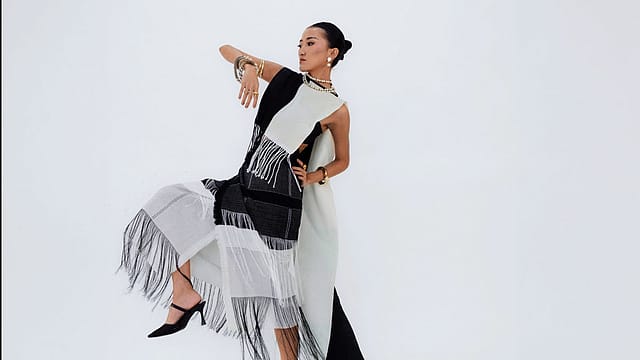
One of Aizawl-based designer Hannah Khiangte’s highlights this year came via Apple. The technology brand’s Diwali film, ‘Rangoli’s Got Rhythm’, created in collaboration with the art and creative agency Howareyoufeeling.Studio, featured dancers wearing ensembles which Khiangte created using textiles woven in Mizoram and referencing the traditional wraparound known as puan. Even the choice of colours—red and pink—was intentional, regarded as auspicious and joyful in Mizoram. The designer has celebrity fans too, from Kareena Kapoor Khan who wore a custom design for a Bvlgari event in April to Jacqueline Fernandez in a white puan during a concert tour in Doha. “These moments helped people develop a visual reference for how Northeastern textiles can be styled in contemporary ways, which is very important for new audiences. We noticed a shift in the kind of conversations people were having with us—more curious and more informed,” says Khiangte. “It definitely carried us somewhere interesting, somewhere bigger, and opened doors that we had only hoped for earlier.”
Designer Easternlight Zimik, based in Ukhrul, Manipur, had his own brush with virality thanks to Sonam Kapoor Ahuja. Zimik building his label, EAST, over the last few years, giving a new-age spin to Tangkhul Naga (the community to which he belongs) clothing such as the kashan—a wrap garment woven on backstrap looms. This year, he has showcased at exhibitions and on runways from Manipur to South Korea but the floodgates opened when Kapoor Ahuja—arguably Bollywood’s most fashion-forward star—wore an EAST kashan set for an event this November. In a matter of hours, Zimik was flooded with congratulatory messages and, more importantly, customer requests. “We are packed with orders until January and most of it is from the mainland,” says the designer. “We also received retail enquiries, but I am keener to grow here in Ukhrul. We want to remain handmade and exclusive.”

Major collaborations and celebrity sightings are shining a brighter spotlight on signers in the Northeast, a region always associated with great style but comparatively less favoured with media and retail attention. Over the years, a few names such as Sonam Dubal, Atsu Sekhose and Jenjum Gadi have built a notable presence. More elusive are the region’s clothing cultures, distinct from the rest of India and from each other. The mekhala’s name changes from one state to another and so does the grammar of motifs and colour. The Mizo puan and the Manipuri phanek may both be wrapped garments, but they look entirely different; the motifs and colours of the Naga mekhala changes from one tribe to another and the garment in Assam follows its own design tradition. In Meghalaya, women wear the jainsem and the jainkyrshah in a style unlike any other part of the region. Draping is a shared practice in the region, and so is weaving—historically done by women in their homes for both ceremonial and everyday wear. Till date, it is not uncommon to find looms in the courtyards of homes especially in rural areas.
The new crop of designers and brands emerging from the Northeast ground their creative vocabulary in these clothing traditions, working with local artisanal communities to conserve as well as contemporise their crafts. Zimik adds new features to his kashan, including belts and pockets, to make the garment easier to wear and more versatile. In Khiangte’s imagination, traditional textiles transform into the base of demi-couture; apart from her, Mizoram is also home to labels such as Ngotè and Kuka Mizo which draw inspiration from traditional designs for their garments and accessories. In Meghalaya, designer Iba Mallai creates naturally dyed stitched garments and stunning jainsems for her label Kiniho—the label found a retail opportunity at The Kunj, New Delhi this year. Nagaland is teeming with textile and fashion labels one of which is Kintem, based in Dimapur and known for its mekhalas and shawls referencing Naga handloom and loinloom weaves but refreshed with geometric patterns, deconstructed motifs, colour blocking and experiments with embellishments and natural dyes. Recently, the brand debuted Bonded, a bridalwear collection aiming to popularise mekhalas at white weddings.
Most of the designers and labels run small, independent businesses—slow, artisanal and bootstrapped. Social media has played a major role in presenting their designs to a wider audience and sparking consumer interest. Online and retail popups, government-backed textile events and increased media coverage have been beneficial in finding business opportunities. Yet, knowledge of Northeastern garments and nuances of craftsmanship among the larger fashion consumer base remains limited. “Our brand, and Northeastern brands in general, are yet to be fully understood,” says Khiangte. “Our cultural imagination needs to be expressed again and again, through various forms of art, media and storytelling, for people to truly connect with it.”
Moala Longchar, founder of Kintem, notes that genuine cultural exchange and partnerships will impact growth. “It would be incredible to see bigger brands (across verticals) and designers come forward for collaborations, co-branding, co-creations, joint campaigns, co-styling and cross-brand shoots, retail and pop-up collaborations impact partnerships,” she says. “This kind of synergy will | create more space and visibility for brands like mine and many others from the Northeast to be part of the larger market.”
The ambition of designers and labels from the region is twofold; one is to preserve crafts and textiles traditional to their region and communities. The other, as Zimik, puts it, “is to integrate our garments into the Indian fashion narrative” —so that, in conversations about Indian clothing traditions, a mekhala in its many avatars comes to mind as promptly as a sari.