Ecstasy in Yellow: What is Sanatani Qawwali?
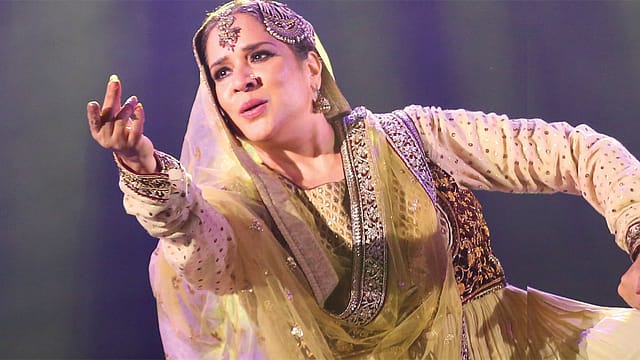
THE BATTLE LINES are drawn.Both sides stand armed and ready to strike. Urdu is Muslim. Hindi is Hindu. Qawwali is Muslim. Bhajan is Hindu. The narrative is stark. Black and white. But human emotions are not black and white—they are of varying shades. The ascetics know, the saints know, the poets know. Perhaps only art can smudge these battle lines, meander through them, gradually coax the hearts and minds and shade them into softer greys.The sensitivity and surrender of an artist can merge the black, the white and the grey, painstakingly shading them one line at a time. Qawwali tells stories and history of mystical Islam; however, a sizeable chunk of qawwali is stories of Krishna, of Basant, of Holi. These are the greys that we need to know, to reread and relearn. At a time when world over lines are being drawn between communities, it is the old traditions and the arts that need to find ways to navigate them with knowledge, ilm, gyan. This is one such effort. If you thought that qawwali is only about Persian, Arabic and Urdu, you will be surprised that Qawwali is equally about Awadhi, Brajbhasha, Punjabi, Hindi, Sindhi and even Bengali.
Qawwali is a musical genre of Sufi music, a devotional music form, which within the Indian subcontinent exhibits common features with the light classical music found in north India.
Shaped by centuries of historical and cultural confluences, it possesses a distinct attribute linked to its spiritual purpose. Characterised by emotionally charged lyrics, imbued with symbolism conveying the soul’s insatiable longing for union with the divine, a qawwali evokes extreme emotions in listeners. When performed in the setting and premises of Sufi shrines, it is clearly a form of worship and devotion and people are found swaying to music, clapping in rhythm with the qawwals, even crying.
Described as a rivayat or confluence, qawwali owes its distinct identity to Hazrat Amir Khusrau, who shaped it at the behest of Hazrat Nizamuddin Auliya, in the bylanes of present day Nizamuddin,(earlier known as Ghiyaspur) in the southern part of Delhi. The essence of Sufism is ishq, mohabbat, love. When Khwaja Moinuddin Chisti of Ajmer, also known as Gareeb Nawaz, arrived in Hindustan to spread Sufism, he encountered the deep-rooted musical traditions of the region. Influenced by the kirtan, the Bhakti ras gaan and the ancient musical heritage of Hindustan, from as early as of the sixth to eighth centuries, he adapted qawwali to align with local sensibilities. While an earlier form of qawwali was initiated nearly a century earlier by Chisti, it was Khusrau who infused it with life, structure and unique characteristics, transforming it into the spiritual and musical tradition as we recognise today.
Legend says that Auliya emphasised the inclusive essence of qawwali, noting that Hindustan, being a land of diverse religions and rituals, needed a single large umbrella and qawwaliemerged as that binding thread to sew the people together. Sufi saint Baba Farid’s response once to receiving a pair of scissors beautifully encapsulates this: “Why give me scissors? I have come here not to divide but to unite; give me a needle and thread to stitch, to sew, to weave and join people.”
In the late 13th century, Khusrau established the Qawwal Bachchon Ka Gharana, a lineage of 12 disciples who were personally trained by him. These disciples laid the foundation and Khusrau started the formalisation of qawwali as a distinct musical genre, remarkably different from the existing musical gharanas. These 12 disciples also ensured the transmission of qawwali through successive generations following the guru-shishya parampara (master-disciple tradition).
As we look today, 700 years since, Sufism and qawwali music did become that invisible thread to ‘sew’ people together and till date people of all religions and status throng the Nizamuddin shrine in the evenings to listen to qawwali. The hierarchy of class, religion, social status, gender, all is forgotten as people sit together on the floor at the shrine, lost in the poetry and emotions. It blurs all divides.

The historical interaction between Hinduism and Islam is complex and cannot be easily chronicled. However, certain similarities can be identified between the Bhakti movement in Hinduism and the Sufi movement in Islam. Though the Bhakti movement emerged a few centuries earlier than the Sufi movement, the two share some common characteristics. One notable similarity is the support they received from the lower rungs of society. People traditionally neglected and considered outcaste by the upper castes thronged Sufi shrines, establishing their own soul connections and a feeling of belonging to the pir, a belonging, which was denied to them in a society ridden with caste and regional distinctions. Both these movements appealed to people across social classes, providing a more accessible and direct approach to spirituality. A spirit of mutual understanding and tolerance developed as a result of the Bhakti and Sufi movements. Followers of both traditions often emphasised the universal nature of divine love and sought to transcend religious and social boundaries. This spirit of inclusivity and acceptance influenced literature, music, arts and spiritual rituals. In literature, the poetry of Bhakti saints like Kabir and Mirabai, as well as the works of Sufi poets such as Rumi and Khusrau, often expressed similar themes of divine love, unity and transcendence.
One significant example of the influence of Bhakti on Sufism can be seen in the story of Amir Khusrau. The Basant festival at the Nizamuddin shrine, going back 700 years, is a vibrant and deeply symbolic annual celebration. Attended by thousands, the festival is a unique confluence of devotion, culture and music, reflecting a centuries-old tradition rooted in a beautiful historical narrative.
Basant, typically a Hindu festival, marks the arrival of spring and transforms his shrine into an ecstatic celebration. The atmosphere turns euphoric as yellow dominates the mood—the shrine bedecked with yellow flowers, devotees dressed in yellow, and qawwals offering traditional yellow mustard flowers. Walking in processions from a designated spot into the shrine they sing Basant songs, recreating the day when Khusrau, the saint’s beloved disciple (mureed) walked in a similar manner for the pir.
The origins of Basant at the Nizamuddin dargah are tied to a poignant story of loss and healing. The story has been handed down through generations, safeguarded and disseminated by the khadims of the dargah. Auliya, who had no children of his own, shared a deep bond with his nephew, Khwaja Taqiuddin Nuh. When illness claimed the young man’s life, the saint was overcome with grief, and his followers yearned to see him smile again. One day, Khusrau, the saint’s favourite disciple, encountered a group of village women dressed in yellow, carrying mustard flowers, singing and dancing as they headed to the Kalkaji temple. When asked whether they will please their God with singing and dancing, they answered in the affirmative. Inspired by their joyous spirit, Khusrau donned yellow robes, carried mustard flowers, and approached the saint while singing the now-famous “Sakal Ban Phool Rahi Sarson”. His playful yet heartfelt gesture succeeded in bringing a smile to the saint’s face, marking a moment of joy amid sorrow. Since that time, the onset of Basant has been celebrated at the dargah with great fervour.
Prayers, sometimes spoken and sometimes sung, resonate throughout the day at the shrine, with showers of yellow petals as qawwals perform the songs of spring. This tradition, initiated during the saint’s lifetime in the 13th century, continues unbroken. The songs preserve an oral heritage that bridges generations.
Through poetry, the qawwals paint a vivid picture of Basant: a fading winter day, the promise of spring in the air, women adorned in elegant attire, birds chirping and singing joyfully, and flowers blooming in abundance. This journey leads to the sacred threshold of Nizamuddin, where devotees carry a chadar (a beautifully woven decorative cloth) and mustard flowers as offerings to the beloved Pir. The festival is accompanied by soul-stirring qawwali performances, including renditions of Khusrau’s compositions, creating an atmosphere of spiritual upliftment and communal harmony, embodying the harmonious essence of Ganga-Jamuni tehzeeb.
THE FAMED GANGA-JAMUNI tehzeeb emanates from the two major rivers that meander through most of north and central India, the Ganga and the Yamuna. It refers to the confluence of two different cultures, Hindu and Muslim. Most Hindu religious sites and important cities like Varanasi, Haridwar and Rishikesh are on the banks of the Ganga, while Agra and Delhi, largely associated with Muslim rulers, are on the banks of the Yamuna. Vrindavan and Mathura, however, defy this stereotype. All of Lord Krishna’s dalliance with the gopis and Radha Rani took place on the banks of the Yamuna and not the Ganga!
Krishna, the Hindu god, even defies the Sufi Islam concept of the poetic content in qawwali, since we have a whole treatise written on Krishna which is sung by qawwals all over the subcontinent. Sufi saint Turab Ali Shah Qalandar and poets like Raskhan, IbneInsha, Muztar Khairabadi have all written on Krishna, and their poetry is actively sung by qawwals. The qawwali “Kanhaiya, yaad hai kuch bhi hamari”, sung by Fareed Ayaz and Abu Mohammad, qawwals from Pakistan, is dedicated to Lord Krishna and has millions of views on YouTube.
A popular qawwali written by Azeemullah Shah Safipuri, “Jhoomat aave nand ke lala, galin mein najariya lag jayein”, dedicated to Lord Krishna, is ecstatically sung by qawwals in Awadh. The Warsis of Dewa, followers of Sufi saint Haji Waris Pak, play with resplendent colours on Holi, a festival associated with Hindu religion, while the qawwali sing songs of Holi and rang, a tradition that is alive even today. The composite nature of Indo- Islamic society of the subcontinent, the shared culture and the obvious similarity between the qawwali and the Indian ritualistic temple singing known as bhajan-kirtan are all embedded in this music tradition.
The Bhakti and Sufi movements, while rooted in different religious traditions, shared common themes, using music as a means to connect with the divine, and contributed to a cultural and spiritual exchange that fostered mutual understanding and tolerance. This interaction played a role in shaping the diverse cultural landscape of the Indian subcontinent. This aspect of syncreticism was not limited to Delhi, it flourished further in Awadh, at the Kakori shrine, where Sufi saint Shah Turab Ali Qalandar wrote on Lord Krishna in documented volumes of diwan (a collection of poetry) which is sung till date by qawwals all over the subcontinent.
Dhan dhan Ram Chandra bhagwan lila lalit dikhane wale
Naumi chait shukl guruvar, linho awadh nagar avtar,
Ghar ghar bhayo mangalachar, tribhuvan yashphailane wale
Dhan dhan Ram Chandra bhagwan lila lalit dikhane wale
This qawwali celebrates the birth of Lord Ram on the ninth day of chaitra shukl paksh (the date according to the Hindu calendar). It goes on to describe the various deeds done by Ram, by saving Ahilya, the cursed wife of Rishi Gautama who had turned her into stone. It also narrates the swayamvar of Ram and Sita, where Ram not only holds Shiva’s bow, but also breaks it after which Sita garlands him. The poet’s name, Mannilal, finds mention at the end of every qawwali.
Excerpted from Kauwali Bahar, a 32-page booklet, written by Pandit Mannilal Mishra and published in 1935 in Varanasi and presently in the archival collection of AN Sharma. It is an unusual document written in Awadhi, a popular language spoken in a wide area in and around Uttar Pradesh. Notably, Awadhi is also the language of many literary works, including those by GoswamiTulsiDasandawide range of Bhakti literature. This archival document helps to assess the times and the cultural belief of society in which a writer, clearly a Brahmin pandit, uses qawwali, a music form associated with Sufi Islam,to write and compose devotional poetry for Hindu gods.
It would have been a regular Hindu religious document if it was simply a collection of poetry under the title of bhajans. It is, however, titled Kauwali. If viewed through the lens of our subcontinent’s composite history and shared culture, there are numerous instances of Hindu poets writing marsiya (elegies) during Muharram (the sacred month of Muslims) and of Muslim poets writing on the Hindu gods Krishna and Ram. Here, in a unique manner the bhajan and the qawwalimerge into one. In 1935, when this was published, India was still undivided. It was perhaps normal for qawwali on Hindu gods to be written and published without the fear of the book being banned. Qawwali is an exquisite manifestation of the music and culture born from the interaction of Hinduism and Islam.
This becomes evident in Kauwali Bahar. The songs in the 40-odd bhajan-qawwali in this booklet span a wide range—from veneration of Indian gods to the mythological stories that people are already well versed with. They are written in a lucid and understandable manner for the general public at large. Hence, instead of the formal Sanskrit language, it is written in Awadhi. Pandit Mannilal Mishra’s Kauwali Bahar has qawwali for Lord Ram, on Sita haran (the abduction of Sita), an invocation to Lord Ganesha, a qawwali on Lord Shiva (Kashi Vishwanath), on Hanuman, on Devi Durga and even a heretical qawwali for Lord Brahma. The booklet begins with an invocation written for Ganesha. It tells us of a cosmopolitan and syncretic society that was completely at ease before the impending partition, a partition based on religion which happened only a decade later.
The bhajan–qawwali bridge exists even today and bhajan is an integral part of the popular poetic forms sung in qawwalis. There is an obvious similarity between the qawwali and the Indian ritualistic temple singing known as bhajan-kirtan. We also see innumerable examples of bhajans being sung by regular qawwals who freely move from singing at the dargah to mata ki chowki (religious evenings for Hindu goddesses) and jagran (all-night religious soirees).
Academics and historians are of the view that both Hazrat Moinuddin Chisti and Hazrat Nizamuddin Auliya, the two foremost Sufi saints of the Chishti silsila (Sufi order), credited with the creation of the qawwali as it exists today in the subcontinent, were said to be greatly influenced by the bhajan and ras gan traditions of Hindu temples. The Islamic concept of ishq (deep, frenzied love) fused with the similar bhakti concept of prem (divine love). In India, devotional practice of bhajan-kirtan had been customary since ancient times, and the use of musical instruments such as mridang, the jhanjh, the manjera, the iktara and the dholak was widespread in the temples.
Though primarily associated with Farsi, Arabic and later Urdu, qawwalis also flourished in numerous regional languages and dialects, becoming a powerful medium for spreading Sufism across the Indian subcontinent. These vernacular expressions allowed Sufi teachings to resonate deeply with local communities, transcending linguistic and cultural barriers.From Sindhi and Punjabi to Arabic, Urdu, Bengali, and purbi dialects like Bhojpuri, Brajbhasha and Awadhi, the versatility and adaptability ofqawwali allowed it to resonate with diverse audiences. Each region contributed its unique linguistic and cultural flavour, making qawwali an inclusive and universal spiritual expression.
Qawwali offers a positive narrative that emphasises the potential for peaceful and harmonious coexistence, promoting a shared cultural ethos that transcends religious and ethnic boundaries. This musical tradition has played a vital role in encapsulating and conveying the essence of emotions, cultural belonging and shared narratives across the Indian subcontinent. And it still does.
(This essay draws on the book Qawwali: The Call of Hearts in Love conceptualised and edited by Manjari Chaturvedi)